You have probably noticed bamboo everywhere lately. It is on toothbrush handles, chopping boards, socks, bedsheets, and the label of that "eco" T-shirt that felt suspiciously soft. The story is always the same: bamboo grows fast, needs almost nothing, and saves the planet. It sounds a little too clean, and if you are the kind of person who reads the label twice before believing it, your instinct is a good one.
Here is the honest version. Bamboo can be one of the better material choices you make, and it can also be one of the most greenwashed. The difference is not the plant. It is what happens to the plant on its way to becoming the thing you are holding.
Why this is worth getting right
Bamboo products usually cost a bit more, and they are often bought specifically because someone wants to make a greener choice. That makes it exactly the kind of decision where a misleading label does real damage. You pay extra, you feel good about it, and in some cases the environmental benefit you were promised was never really there.
Getting this right is not about guilt or buying a perfect version of everything. It is about knowing which bamboo products earn their reputation and which ones are riding on it, so your money and effort land where they actually count.
What bamboo is, and why it got its reputation
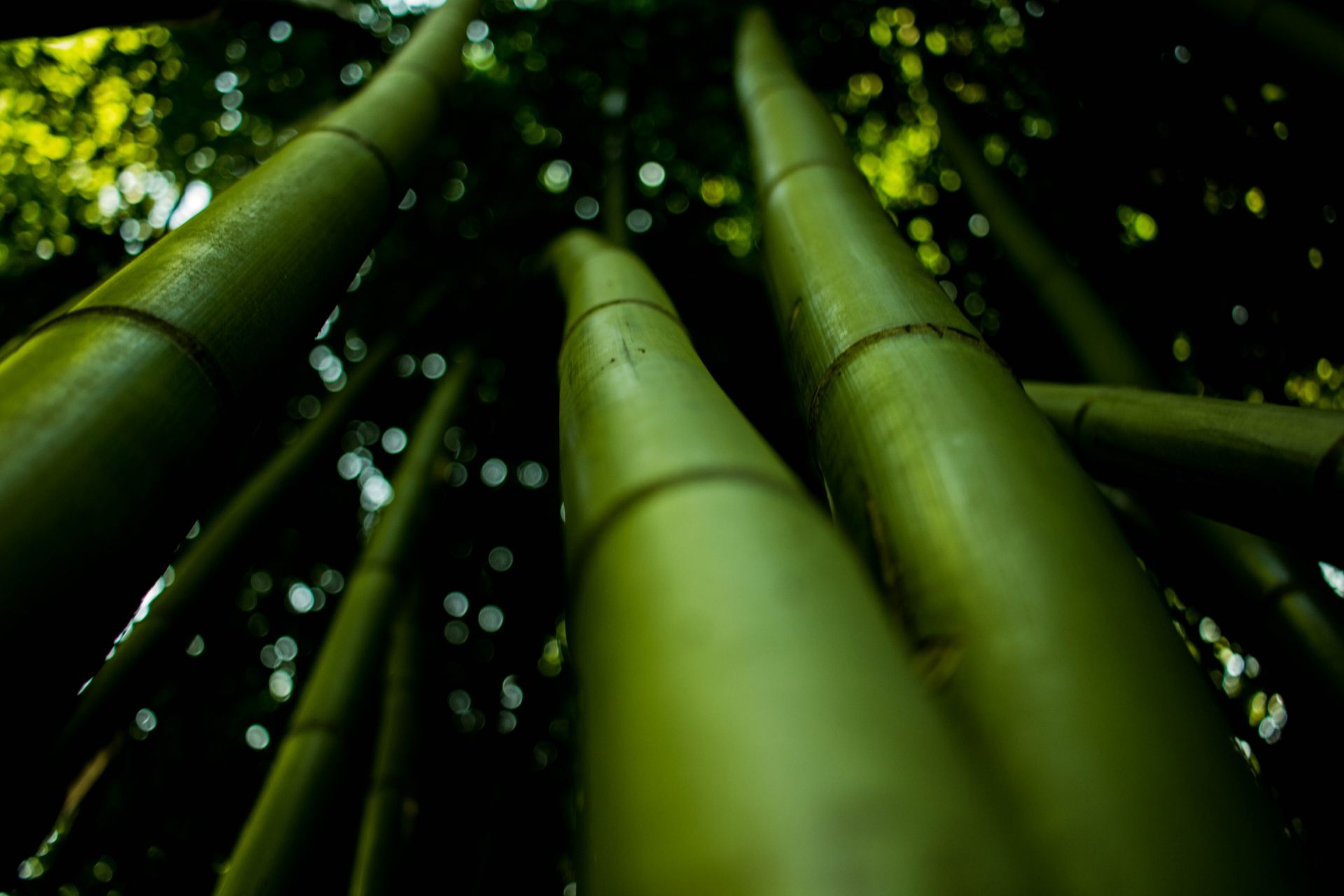
Bamboo is not a tree. It is a fast-growing grass, and that single fact explains most of its appeal. Because it regrows from its existing root system after cutting, it does not need to be replanted each harvest, and some species reach maturity in around four years, compared with decades for many hardwoods (Dovetail Partners, 2014).
Grown well, bamboo has genuine strengths. It can produce several times more usable material per hectare each year than a temperate hardwood forest, it holds soil together on slopes, and it keeps absorbing carbon as it regrows. None of that is marketing. As a raw plant, bamboo really is productive and quick to renew.
The problem is that "the plant is impressive" quietly becomes "therefore anything labelled bamboo is green." Those are two different claims, and only the first one is reliably true.
What the evidence actually says
Bamboo fabric is usually not what it sounds like
This is the big one, because clothing and bedding are where most people meet bamboo. The soft, silky fabric marketed as bamboo is almost always bamboo viscose (a type of rayon). To make it, the plant is dissolved into a pulp using sodium hydroxide and then treated with carbon disulfide, a chemical linked to worker health harms, before being spun into fibre. The process is water-intensive and can release air and water pollution when factories are not tightly controlled (Bamboo U, 2024).
At that point, most of the original plant is gone. You are wearing a regenerated cellulose fibre that happens to have started as bamboo, which is very different from the pesticide-free wonder-crop on the tag. Regulators have noticed. In April 2022, the US Federal Trade Commission fined Walmart and Kohl's a combined 5.5 million dollars (3 million and 2.5 million respectively) for marketing rayon products as "bamboo" and describing them as free of harmful chemicals. As the FTC put it, "converting bamboo into rayon requires the use of toxic chemicals and results in hazardous pollutants," and companies that greenwash "can expect to pay a price" (FTC, 2022).
There are cleaner ways to make bamboo fabric. Bamboo lyocell uses a closed-loop process that recaptures and reuses its solvents, and true mechanically processed bamboo linen skips the harsh chemistry altogether. Both are real. Both are also uncommon, because they cost more and are made in only a handful of facilities. Unless a product specifically says lyocell or mechanically processed linen, the safe assumption is standard viscose.
The farming is greener than trees, but not effortless
The "needs no pesticides, fertiliser, or irrigation" line is true for wild bamboo and misleading for most commercial bamboo. Intensively managed plantations, which supply the bulk of what you buy, tell a different story. Studies of Moso bamboo, the dominant commercial species, have recorded farmers applying roughly 200 to 350 kilograms of nitrogen fertiliser per hectare each year, along with pesticides and herbicides to protect yields (Dovetail Partners, 2014). Bamboo also likes plenty of water, so the idea that it thrives on neglect does not hold up at plantation scale.
There is a land question too. In China, where most commercial bamboo grows, a single species now dominates: Moso covers more than 80 percent of the country's bamboo area, and natural mixed forest has been cleared to plant it. That matters for wildlife. One study cited in the same review found bird diversity fell from 35 species in mixed forest to 15 species in bamboo monoculture (Dovetail Partners, 2014). Fast-growing and renewable does not automatically mean rich in life.
Solid bamboo products often do earn the label
Now the good news, because skepticism cuts both ways. When bamboo is used as bamboo, cut, shaped, and left largely intact rather than dissolved, it tends to hold up well. The clearest example is the humble toothbrush. A 2020 life-cycle assessment published in the British Dental Journal compared plastic, electric, replaceable-head, and bamboo toothbrushes over five years. The bamboo manual and the replaceable-head plastic brushes had the lowest environmental impact across all categories, while the electric toothbrush had eleven times the climate impact of the bamboo option (Lyne et al., 2020).
The same logic applies to bamboo chopping boards, utensils, and furniture. These use the plant's natural structure, involve far less chemical processing than viscose, and last for years. This is the version of bamboo the marketing wants you to picture, and here it is largely accurate.
How to make a genuinely better choice
You do not need to memorise chemistry to shop well. A few habits do most of the work.
Favour bamboo in its solid form. Toothbrush handles, boards, utensils, and furniture are where bamboo's benefits show up most reliably.
For fabric, read past the word "bamboo." Look for "bamboo lyocell" or "mechanically processed bamboo linen." If it just says bamboo, or bamboo viscose or rayon, treat it as a comfortable regenerated fabric rather than a green upgrade over a well-made cotton or a proper lyocell.
Look for a real certification, not a leaf icon. An FSC mark on the raw material, or an OEKO-TEX or similar standard on finished textiles, means something a vague "eco-friendly" claim does not.
Buy for durability, and buy less often. A bamboo item that replaces many disposable ones, and that you actually keep for years, does more good than any single material choice on the shelf. If what you already own still works, the greenest move is usually to keep using it.
Common mistakes to avoid
Assuming "bamboo" on a clothing tag means low-impact. In most cases it means viscose, which is a chemical-heavy process regardless of the plant it started from.
Trusting "free of chemicals" or "natural" claims at face value. These were the exact phrases at the centre of the FTC case. They are marketing language, not verified facts.
Throwing out perfectly good plastic items to replace them with bamboo. The impact of making and shipping the new product often outweighs the benefit. Replace things as they wear out, not on impulse.
Forgetting the bristles on a bamboo toothbrush. The handle may be compostable, but most bristles are nylon and are not. Snap or pull them out before composting the handle, or check whether your brand offers a takeback option.
Frequently asked questions
Is bamboo fabric better than cotton? It depends on how each is made. Standard bamboo viscose and conventional cotton both carry meaningful environmental costs, just different ones. Bamboo lyocell can be a strong option, and so can organic or well-managed cotton. The processing method matters more than the plant.
Is bamboo really biodegradable? Solid, untreated bamboo will break down. Bamboo viscose fabric is more complicated, because dyes and finishes affect how it degrades, and blended fabrics containing polyester will not fully compost. A bamboo toothbrush handle composts, but its nylon bristles do not.
So is bamboo good or bad? Neither, on its own. A solid bamboo toothbrush or board is usually a sound choice. A viscose bamboo T-shirt marketed as chemical-free is mostly clever labelling. Judge the product, not the plant.
Does buying bamboo help fight deforestation? Sometimes, when it replaces higher-impact materials. But large bamboo plantations have also replaced natural forest in parts of China, which reduces biodiversity. Certification such as FSC is your best signal that the source is responsibly managed.
Key takeaways
Bamboo the plant is genuinely fast-growing and renewable, and that part of the story is true. The sustainability of any bamboo product, though, depends almost entirely on how it was made. Solid bamboo items like toothbrushes, boards, and furniture generally live up to their reputation. Most bamboo fabric is viscose, a chemical-heavy process that has already drawn multimillion-dollar greenwashing penalties, so it deserves a closer look before you pay a premium for it. Read past the word "bamboo," favour real certifications and durable items, and keep what you already own for as long as it lasts. Your skepticism was pointing you in the right direction.
Related PetalPoko articles
Cotton vs. Polyester: Which Has the Lower Environmental Impact?
Recycled Plastic (rPET): Is It Really a Better Choice?
How to Spot Greenwashing in Everyday Product Claims
Buying Guides: Choosing Everyday Products That Last
Sources and further reading
Federal Trade Commission (2022), FTC Uses Penalty Offense Authority to Seek Largest-Ever Civil Penalty for Bogus Bamboo Marketing from Kohl's, Walmart. https://www.ftc.gov/news-events/news/press-releases/2022/04/ftc-uses-penalty-offense-authority-seek-largest-ever-civil-penalty-bogus-bamboo-marketing-kohls
Dovetail Partners / Jim Bowyer et al. (2014), Bamboo Products and Their Environmental Impacts: Revisited. https://www.dovetailinc.org/report_pdfs/2014/dovetailbamboo0314.pdf
Bamboo U (2024), Bamboo Fabric: Is It Actually Sustainable? https://bamboou.com/bamboo-fabric-is-it-actually-sustainable/
Lyne, A. et al. (2020), Combining evidence-based healthcare with environmental sustainability: using the toothbrush as a model, British Dental Journal. https://pubmed.ncbi.nlm.nih.gov/32918023/