A cat you rarely see, holding a forest together
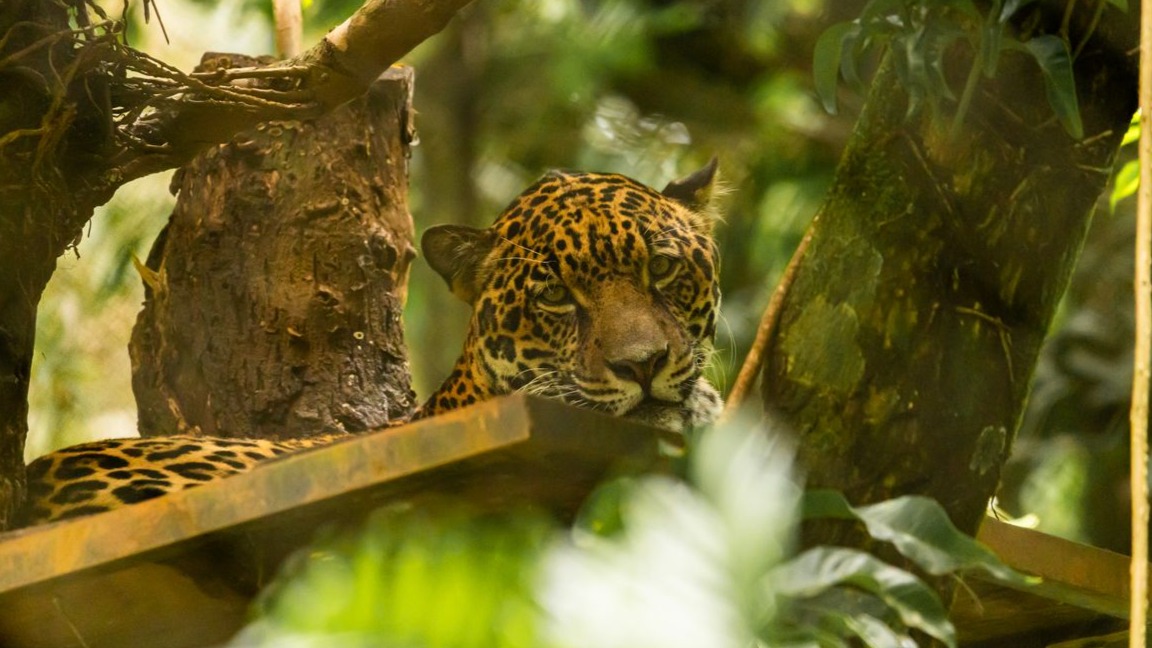
Most of us picture jaguars as a poster animal: a golden coat, dark rosettes, a still gaze from the pages of a wildlife magazine. What that picture misses is how quietly consequential they are. A single jaguar can range across a territory larger than a small city, mostly unseen, and the health of the forest around it often tracks closely with whether the cat is still there.
If you care about rainforests, jaguars are worth understanding on their own terms. They are genuinely remarkable, and the reasons they matter turn out to be practical, not sentimental.
Why this matters in everyday life
It is easy to file jaguars under "faraway wildlife" and move on. The link to daily life is more direct than it looks. Jaguars live across 18 countries, from Mexico to Argentina, and their strongholds overlap with the forests that store carbon, regulate rainfall, and supply the timber, beef, soya, and palm oil traded around the world, according to WWF. When those forests are cleared, jaguars are among the first large animals to disappear, which makes them a useful early signal of ecosystem strain. Understanding them is a way into understanding how tropical forests work, and where everyday choices quietly connect to a distant treeline.
Meet the jaguar
The jaguar (Panthera onca) is the only member of the big cat genus Panthera native to the Americas. It is stockier and more powerfully built than the leopard it is often confused with, with a broad head, short legs, and a compact, muscular frame suited to ambush hunting. Adults vary a lot by region: Central American jaguars tend to be smaller, while those in the Amazon and the Pantanal wetlands of Brazil are among the largest, according to WWF.
Jaguars are largely solitary and territorial, marking their range and generally keeping to themselves outside of mating, as National Geographic describes. They are also famously elusive, which is part of why so much about them was pieced together only recently. With that introduction in place, here is what the evidence actually says.
What the evidence actually says: 12 verified facts
They are the largest cat in the Americas, and the third largest in the world. Only tigers and lions are bigger. Males can weigh around 120kg and females around 100kg, with the largest individuals in the Amazon and Pantanal, according to WWF.
The name may come from an Indigenous word for a fearsome hunter. WWF notes the name is commonly traced to an Indigenous (Tupian) term often translated as "he who kills with one leap." Translations of old oral languages carry some uncertainty, so this is best read as a widely repeated origin story rather than a settled fact.
They have the strongest bite relative to size of any big cat. WWF states jaguars have a more powerful bite than any other big cat. You may see a precise figure quoted in pounds per square inch, but those numbers vary between sources and are not consistently verified, so the reliable claim is the comparative one: pound for pound, the jaguar's bite leads the group.
That bite can pierce skulls and turtle shells. Their teeth are strong enough to bite through the thick hides of crocodilians and the hard shells of turtles, according to WWF. Rather than suffocating prey at the throat, as many big cats do, jaguars often kill with a bite to the back of the skull, and can take prey three to four times their own weight.
Unlike most cats, they love water. Jaguars are confident swimmers known to cross large rivers, and they live around lakes, rivers, and wetlands, according to WWF. National Geographic notes they do not avoid water the way many cats do, and the Smithsonian records Pantanal jaguars hunting close to rivers.
They hunt fish, caimans, and turtles as readily as deer. Their diet is unusually broad. Panthera reports jaguars prey on more than 85 species, from capybaras and peccaries to caimans, fish, and reptiles, which is part of why they can persist across such varied habitats.
The "black panthers" of the Americas are jaguars. A melanistic jaguar, one carrying extra dark pigment, appears almost black, and these animals are commonly called black panthers, according to WWF. The rosette pattern is usually still visible in the right light.
Their rosettes have spots inside, which sets them apart from leopards. The clearest way to tell the two apart: jaguar rosettes contain small dark spots in the centre, while leopard rosettes do not, as WWF and BBC Wildlife both note. Jaguars also have larger, rounder heads and a stockier build.
They are largely solitary and hold large territories. Jaguars live and hunt alone for the most part, establishing territories through scent marking and clawing trees, according to National Geographic. Some recent research has observed male jaguars forming cooperative coalitions, so the picture is not absolute, but solitary living remains the norm.
They are apex predators and an umbrella species. As top predators, jaguars help maintain the structure and function of their ecosystems, and protecting the large ranges they need shelters many co-occurring species at the same time, which is why WWF describes them as an umbrella species.
They are listed as Near Threatened, and declining. The IUCN Red List classifies the jaguar as Near Threatened with a decreasing population, a status confirmed by WWF, Panthera, and the Smithsonian.
They have lost roughly half their historic range. Jaguars have disappeared from close to 50% of the range they once occupied, and WWF records a decline of around 20% in a span of just 14 years. They are already regionally extinct in countries such as El Salvador and Uruguay.
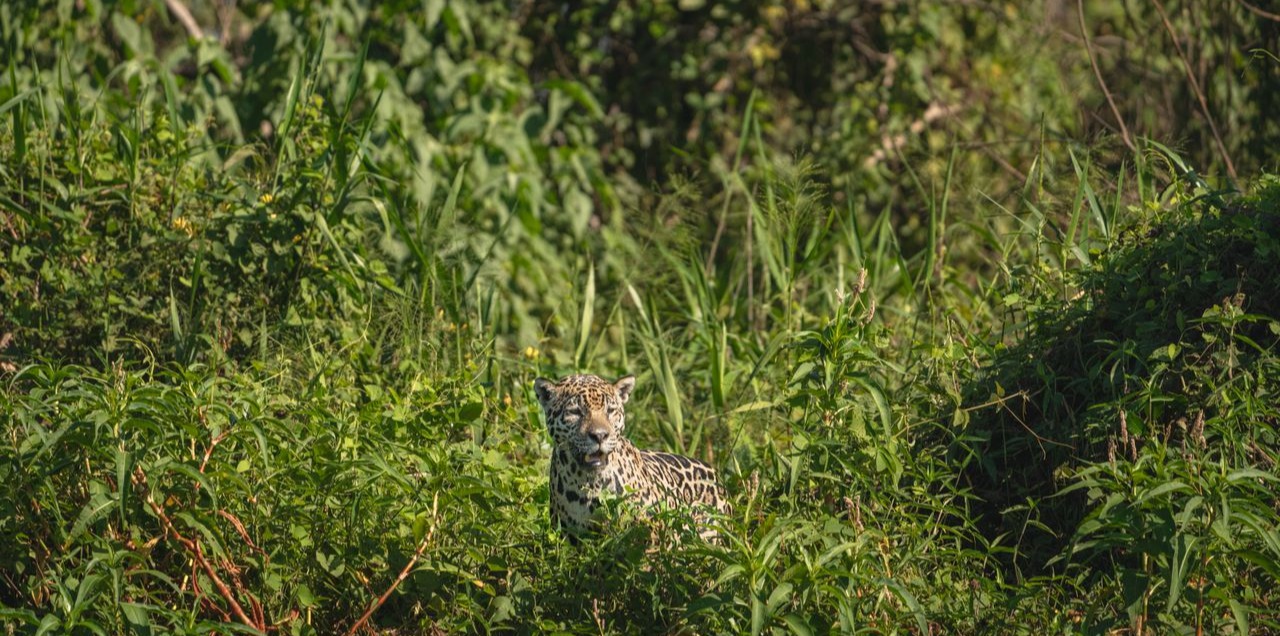
Why jaguars matter to the rainforest
The facts above are interesting in themselves, but the second half of the story is ecological. As apex predators, jaguars sit at the top of the food web and help regulate the numbers of the animals they hunt, including peccaries, capybaras, deer, and other herbivores. When those plant-eaters go unchecked, they can over-browse seedlings and saplings and strip seeds from the forest floor, which over time reshapes which trees grow and how diverse the forest remains. A predator that keeps herbivore populations in balance is, indirectly, helping the forest regenerate.
This is why ecologists often treat jaguars as a keystone and umbrella species. A jaguar needs a large, connected, prey-rich territory to survive. Protect enough intact forest for a viable jaguar population, and you inevitably protect the countless smaller species, water systems, and plant communities that share that space. WWF frames this as conserving "the jaguar king to protect its entire kingdom," and the Smithsonian notes that researchers use jaguars precisely as a guide for identifying priority areas and wildlife corridors.
The reverse is the worry. Losing jaguars is rarely an isolated event. It usually signals that a forest has been fragmented, its prey depleted, or its edges pushed back by clearance, and the ripple effects reach well beyond one cat. This is the reasoning behind Panthera's Jaguar Corridor Initiative, which works to keep core jaguar populations genetically connected from Mexico to Argentina rather than stranded in isolated pockets. The health of the cat and the health of the forest are, in practice, hard to separate.
Practical actions that genuinely help
You do not need to live near a rainforest to make a difference at the margins. A few realistic options:
Support reputable jaguar and rainforest conservation. Established organisations such as Panthera, WWF, and Rainforest Trust fund habitat protection, corridor work, and coexistence programmes with ranchers. A small recurring donation to a credible group tends to help more than a one-off gesture.
Reduce demand for deforestation-linked products. Much jaguar habitat is cleared for cattle, soya, and palm oil. Choosing products with credible forest-friendly certification, eating less beef, or checking sourcing where you can all reduce pressure over time. The benefit depends on consistent choices rather than any single purchase, and no label is perfect, so treat certification as a helpful signal, not a guarantee.
Choose responsible ecotourism. Well-managed wildlife tourism, for example in Brazil's Pantanal, can give local communities an economic reason to keep jaguars alive. Look for operators that follow wildlife-viewing guidelines and channel money into local conservation.
Share accurate information. Jaguars attract a lot of exaggerated claims online. Passing on verified facts, and gently correcting myths, helps build the kind of steady public understanding that conservation depends on.
Common misconceptions to avoid
"Jaguars and leopards are the same cat." They are separate species on different continents. The spots-inside-the-rosette detail is the quick tell.
"A black panther is its own species." It is not. In the Americas, a black panther is a melanistic jaguar, and elsewhere the term is used for melanistic leopards.
"Cats hate water, so jaguars avoid it too." Jaguars are strong swimmers that hunt in and around rivers and wetlands.
"They are aggressive man-eaters." Jaguars are elusive and generally avoid people. Most conflict stems from habitat loss and livestock predation, not from any tendency to hunt humans.
"One donation or one purchase saves the species." Real progress comes from sustained habitat protection, connected corridors, and reduced deforestation pressure over years, not from a single action.
Frequently asked questions
How many jaguars are left in the wild? Estimates are difficult because jaguars are elusive and wide-ranging. WWF has cited a figure of roughly 173,000, with around half living in Brazil. Treat any single number as an approximation rather than a precise count.
Are jaguars endangered? Not at the global level, but the direction of travel is concerning. The IUCN lists them as Near Threatened with a declining population, and several individual countries classify them as endangered within their borders, as the Smithsonian notes.
What is the difference between a jaguar and a leopard? Jaguars live in the Americas and are stockier with larger heads; leopards live in Africa and Asia. The clearest visual difference is that jaguar rosettes have small spots inside them, while leopard rosettes do not.
Do jaguars really have the strongest bite of the big cats? Relative to their body size, yes, according to WWF. Their jaws can pierce skulls and crack turtle shells. Specific pressure figures circulate widely but are inconsistent between sources, so the comparative claim is the dependable one.
Why should someone who lives far away care about jaguars? Because jaguars are a barometer for rainforest health. Protecting the large, connected habitats they need also protects carbon-storing forests, freshwater systems, and thousands of other species.
Key takeaways
Jaguars are the largest cat in the Americas and the third largest in the world, with the strongest bite relative to size of any big cat.
They are strong swimmers, have unusually broad diets, and the "black panthers" of the Americas are melanistic jaguars.
As apex predators and an umbrella species, they help keep rainforests balanced, and protecting them protects entire ecosystems.
They are Near Threatened and declining, having lost roughly half their historic range, mainly to deforestation, fragmentation, and conflict with ranchers.
You can help through credible conservation support, lower-deforestation choices, responsible ecotourism, and sharing accurate information.
Related PetalPoko articles
Meet the Axolotl, the Salamander That Can Regrow Its Own Limbs
How to Help Local Wildlife Without Accidentally Harming It
Why Bees Do Far More for You Than Make Honey
Sources and further reading
WWF, Jaguar species page: worldwildlife.org/species/jaguar
WWF UK, Top facts about jaguars: wwf.org.uk/learn/fascinating-facts/jaguars
Panthera, Jaguar species profile: panthera.org/cat/jaguar
Panthera, Jaguar Program and Corridor Initiative: panthera.org/pantheras-jaguar-program
National Geographic, Jaguar facts: nationalgeographic.com/animals/mammals/facts/jaguar
Smithsonian, Movement of Life, Jaguar: movementoflife.si.edu/species/jaguar
BBC Wildlife (Discover Wildlife), Jaguar facts: discoverwildlife.com/animal-facts/mammals/facts-about-jaguars
Rainforest Trust, Saving habitat for jaguars: rainforesttrust.org/saving-endangered-species/jaguar