A fair question worth asking honestly
You have probably seen the advice more than once. Eat with the seasons, buy local, shorten the distance between the farm and your plate, and you will shrink your carbon footprint. It sounds sensible. Food that travels less should surely burn less fuel getting to you.
If you have ever felt a small flicker of doubt about that logic, you are asking the right question. The relationship between seasonal eating and your climate impact is real, but it is not the one most headlines suggest. The distance your food travels usually matters far less than the way it was produced. That does not make seasonal eating pointless. It means the benefits show up in specific places, and knowing where lets you spend your effort well.
This is not about guilt or perfect choices. It is about understanding what the evidence actually shows, so your decisions match reality rather than a slogan.
Why this is worth your time
Most of us have limited attention for sustainability. You cannot research every purchase, and you should not have to. So the useful question is not "is local good?" but "where does local and seasonal eating give me the most return for my effort?"
Getting this wrong has a quiet cost. If you believe food miles are the main problem, you might feel you have done your part by buying local while overlooking the choices that carry far more weight. Understanding the evidence helps you relax about some things and focus on others, which is a better outcome than a longer to-do list.
What "seasonal" and "local" actually mean
It helps to separate two ideas that often get bundled together.
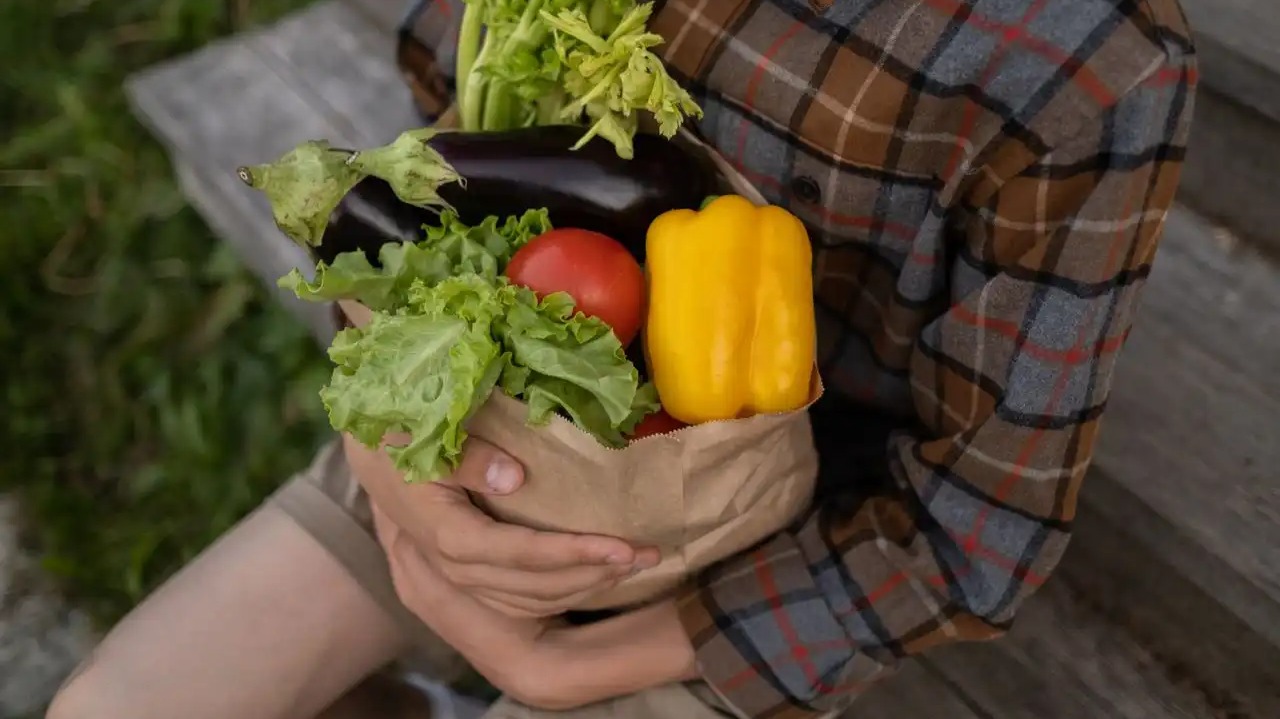
Eating seasonally means choosing foods when they naturally grow and ripen in your region, so strawberries in summer rather than midwinter, or squash in autumn. Seasonal produce is often grown outdoors without artificial heating or extended cold storage.
Eating locally means choosing food produced near where you live, which shortens the transport distance. The two overlap but are not the same. A local tomato grown in a heated glasshouse in December is local but not seasonal. An imported orange in season where it was grown is seasonal but not local.
The term you will meet often is food miles, meaning the distance food travels from where it is produced to where it is eaten. Food miles are easy to picture, which is part of why they get so much attention. The trouble is that intuition and measured emissions do not line up as neatly as you might expect.
What the evidence actually says
Here is the finding that reframes the whole question. Across the food system, transport is a relatively small share of emissions.
The most cited evidence comes from a large study by Joseph Poore and Thomas Nemecek, published in the journal Science in 2018, which drew on data from roughly 38,700 farms across 119 countries and 40 products. Drawing on that work, the research team at Our World in Data reports that food systems account for around a quarter (roughly 26%) of global greenhouse gas emissions, and that transport makes up only about 5% of food's emissions overall. For most individual foods, transport is less than 10% of their footprint, while farm-stage processes and land use account for the large majority.
The reason is partly how food moves. According to Our World in Data, most food travels by ship, and shipping is a comparatively low-carbon way to carry heavy goods. Boat freight can emit in the region of 10 to 20 times less per tonne-kilometre than road transport, and far less than flying. So the "miles" you picture on a map are often quiet, efficient miles across the ocean.
Beef makes the point vividly. Our World in Data reports that beef produces around 60 kilograms of carbon dioxide equivalent per kilogram of meat, and that transport is only about 0.5% of that total. As Hannah Ritchie of Our World in Data puts it, "it is not the location that makes the carbon footprint of your dinner large, but the fact that it is beef." By comparison, peas come in at roughly 1 kilogram of carbon dioxide equivalent per kilogram. A local steak still carries a much larger footprint than lentils shipped halfway around the world.
To put the ceiling in context, Our World in Data notes that if you sourced all of your food locally, you might cut your diet's footprint by around 5% at most. Swapping red meat and dairy for plant-based foods just one day a week can achieve a similar saving. In other words, what you eat generally matters more than how far it travelled.
The exceptions that genuinely matter
None of this means transport is always trivial. There are real cases where distance and season change the picture, and seasonal eating helps precisely here.
Air freight. Flying food is dramatically more carbon-intensive than shipping it, on the order of around 50 times more per tonne-kilometre by Our World in Data's figures. Air freight is rare, making up only about 0.2% of food miles, but it tends to apply to highly perishable items that cannot survive a slow sea journey, such as some berries, asparagus, and green beans flown in out of season. When a delicate fresh product has crossed an ocean outside its natural season, air freight becomes more likely, and this is one case where the transport footprint can be large. Buying these items in their local season is a genuine improvement.
Heated greenhouses. Growing warm-weather crops out of season often requires artificial heating and lighting, which can carry a substantial energy cost. Several studies have found that produce such as tomatoes grown locally in heated glasshouses out of season can have a higher carbon footprint than the same produce grown outdoors in season elsewhere and transported in. The specific numbers vary with the crop, the energy source, and the climate, so it is fair to hold this as a well-supported pattern rather than a fixed figure. The practical point is steady: a "local" label does not help much if the food was grown in an energy-hungry way to beat the season.
This is where seasonal eating earns its place. Choosing produce in its natural growing season tends to avoid both of these higher-emission situations, because in-season food is more likely to be field-grown and shipped rather than heated or flown.
How to eat seasonally in ways that genuinely help
You do not need to overhaul your diet. A few targeted habits capture most of the benefit.
Prioritise what you eat over how far it came. Shifting some meals towards plants, and being mindful of high-footprint foods like beef and lamb, does more for your footprint than optimising distance. Seasonal eating works best as a complement to this, not a substitute.
Watch for air-freighted fresh produce. Delicate items available far outside their local season, such as fresh berries or asparagus in deep winter, are the ones most likely to have flown. Choosing them in season, or choosing frozen versions, sidesteps the issue.
Be cautious about out-of-season "local" produce grown under heat. Local and low-footprint are not the same thing when heated growing is involved. In-season and field-grown is the more reliable signal.
Lean on frozen and tinned when fresh is out of season. Freezing and canning are usually low-impact ways to preserve nutrients, and they let you enjoy produce grown in season without air freight or heated growing.
Cut waste first. Food you buy and then throw away carries its full footprint for zero benefit, so reducing waste is one of the most reliable wins available to you, seasonal or not.
Common misconceptions to avoid
"Local always means lower carbon." Not reliably. Transport is a small share of most foods' emissions, and locally grown out-of-season produce can sometimes carry a higher footprint than imported in-season produce, according to Our World in Data and greenhouse-emissions research.
"Food miles are the main climate problem with food." For most foods they are a minor part. Farm-stage emissions and land use dominate, per the Poore and Nemecek dataset.
"Eating seasonally does nothing, so why bother." This overcorrects. Seasonal eating genuinely helps you avoid air freight and heated growing, and it carries other benefits, such as fresher produce and often lower cost at peak supply. The point is to be accurate about where the carbon benefit lies.
"Imported food is automatically worse than domestic." Not necessarily. Much international food travels efficiently by sea, and Our World in Data notes that road transport, including domestic delivery, accounts for the majority of food transport emissions.
Frequently asked questions
So is eating seasonally a waste of time for the climate? No. Its climate benefit is real but focused. It mainly helps by steering you away from air-freighted and heated-greenhouse produce, which are the higher-emission cases. Alongside that, it offers non-carbon benefits like freshness and supporting nearby farms.
Does buying local reduce my carbon footprint at all? A little. Our World in Data estimates that sourcing all your food locally might cut your diet's footprint by around 5% at most. It is a modest gain compared with adjusting what you eat.
Which foods should I most try to buy in season? The delicate, perishable ones that are often flown when out of season, such as fresh berries, asparagus, and green beans. These are where seasonal choices make the clearest difference.
Is frozen produce a reasonable choice? Often yes. Freezing is generally a low-impact preservation method, and frozen produce lets you eat foods grown in season without relying on air freight or heated growing later in the year.
If food miles are small, what should I focus on instead? The evidence points to what you eat. Shifting some meals towards plants, moderating high-footprint meats, and reducing food waste tend to matter more for your footprint than distance travelled.
Key takeaways
Transport is a relatively small share of most foods' emissions, around 5% of food's total footprint globally, according to Our World in Data and the Poore and Nemecek 2018 study.
What you eat generally matters more than how far it travelled. Beef's footprint dwarfs that of plant foods regardless of distance.
Seasonal eating still helps in specific cases, chiefly by avoiding air-freighted and heated-greenhouse produce.
Buying everything local might cut your diet's footprint by around 5% at most, a smaller gain than changing what is on your plate.
Seasonal and local eating also carry non-carbon benefits, including freshness, cost at peak supply, and support for local growers.
Related PetalPoko articles
Is a Plant-Forward Diet Worth It for the Planet? A Balanced Look
How to Cut Food Waste at Home Without Overhauling Your Whole Routine
What the Date Labels on Food Really Mean (and When to Trust Your Senses)
Sources and further reading
Ritchie, H. "You want to reduce the carbon footprint of your food? Focus on what you eat, not whether your food is local." Our World in Data. https://ourworldindata.org/food-choice-vs-eating-local
Ritchie, H., Rosado, P., and Roser, M. "Environmental Impacts of Food Production." Our World in Data. https://ourworldindata.org/environmental-impacts-of-food
Our World in Data. "Most food is transported by boat, so food miles are a relatively small part of the carbon footprint of most diets." https://ourworldindata.org/data-insights/most-food-is-transported-by-boat-so-food-miles-are-a-relatively-small-part-of-the-carbon-footprint-of-most-diets
Poore, J., and Nemecek, T. (2018). "Reducing food's environmental impacts through producers and consumers." Science, 360(6392), 987-992. https://www.science.org/doi/10.1126/science.aaq0216
Ritchie, H. "Eating local is still not a good way to reduce the carbon footprint of your diet." https://hannahritchie.substack.com/p/food-miles
Our World in Data. "FAQs on the environmental impacts of food." https://ourworldindata.org/faqs-environmental-impacts-food