The half-used roll in the drawer
You reach for the cling film to cover half a lemon or the last of a bowl of soup, tear off a sheet, and it folds back on itself before it reaches the plate. A few seconds later that crumpled piece is in the bin, and the roll has shrunk a little more. If you have ever wondered whether a reusable wrap or a stretchy lid would save you the fuss, and whether it would genuinely be a better choice, you are asking a sensible question. The honest answer is that it depends, and this article walks you through what it depends on.
Why this matters in an everyday kitchen
Covering food is one of those small, repeated tasks that adds up quietly. A household can get through a lot of cling film in a year without noticing, because each sheet feels like nothing. The appeal of a reusable wrap or lid is partly practical: you are not hunting for the torn edge of the roll, and a good lid seals a bowl in one motion. It is also about waste, because cling film is used once, thrown away, and, as you will see below, difficult to recycle in most places. Choosing a reusable option is one way to cut down on that steady stream of thin plastic, provided you actually keep using it, and that condition matters more than any marketing claim.
The options, explained simply
Three common choices sit on the shelf, and they work in different ways.
Cling film is a thin plastic film that clings to itself and to smooth surfaces. It is cheap, widely available, and good at sealing awkward shapes. Some cling film is made from PVC (polyvinyl chloride), and some newer versions from LDPE (low-density polyethylene), which behaves differently at recycling points. It is designed for single use.
Beeswax wraps are squares of cotton fabric coated in a blend of wax and oil. According to guidance from the University of California Agriculture and Natural Resources, a typical wrap combines beeswax, jojoba oil, and a little tree resin over cotton. The warmth of your hands softens the coating so the wrap moulds around a bowl or a piece of cheese and holds its shape as it cools. Vegan versions swap the beeswax for a plant wax, often soya or candelilla wax, and work in much the same way. They are breathable, which suits some foods and not others.
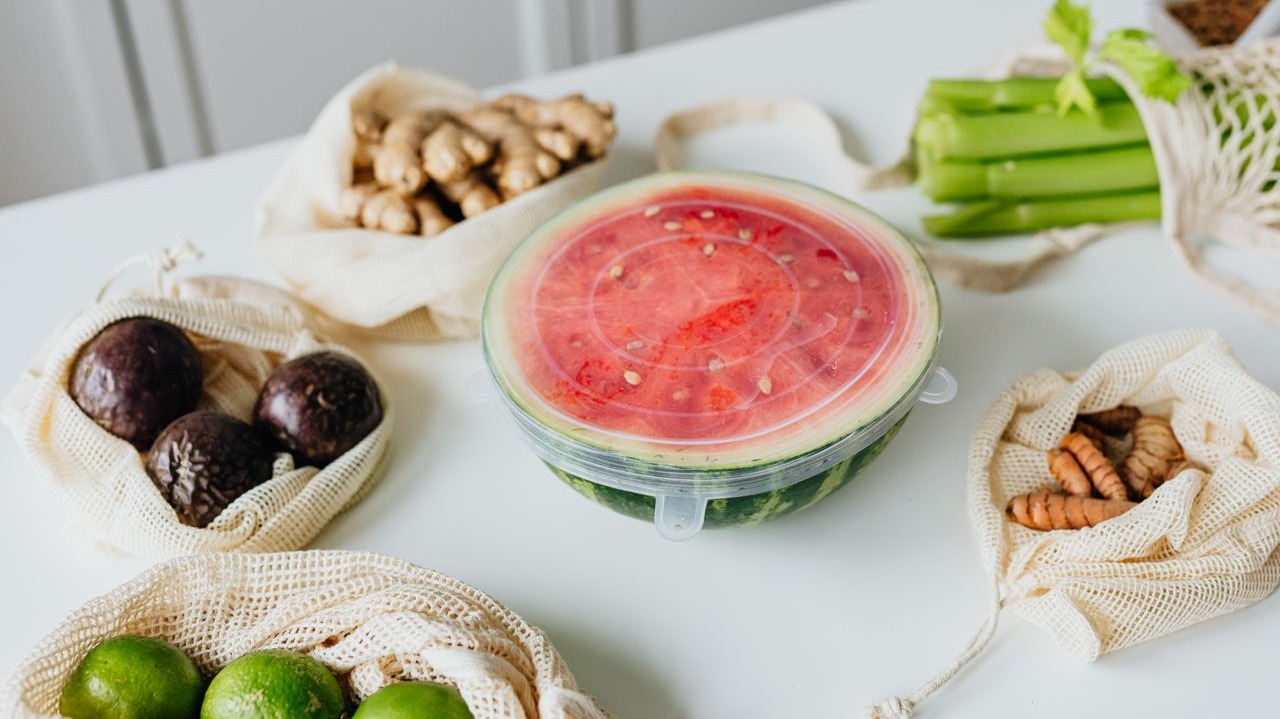
Silicone lids and covers are flexible, stretchy caps made from food-grade silicone, a synthetic material derived from silica (a component of sand). A stretch lid pulls over the rim of a bowl, jar, or cut fruit and grips it to form a seal. Silicone is durable, tolerates heat and cold, and is generally dishwasher safe, so these covers are among the longest-lived options here.
What the evidence actually says
The central idea behind reusables is straightforward. Making a beeswax wrap or a silicone lid takes more material and energy up front than making a single sheet of cling film, so to come out ahead the reusable item has to replace many sheets of film over its life. This is the same break-even logic that applies to reusable bags, bottles, and cups: the benefit is not in owning the item, it is in using it enough times to pay back the resources that went into it. Life-cycle thinking, which weighs sourcing, manufacturing, transport, use, washing, and disposal together, tends to favour reusables when they are genuinely reused over a long period, and the advantage shrinks or disappears when they are used a handful of times and forgotten in a drawer.
So the useful question is not "which is greener" in the abstract, but "how many times will you actually use this, and how will you look after it." A few factors shape the answer.
Lifetime use. A beeswax wrap, cared for well, lasts roughly a year according to the UC ANR guidance before the coating wears thin. A silicone lid can last far longer, often years, because the material is hard-wearing. The more sheets of cling film each one displaces, the stronger the case for it, and used rarely, neither reaches its break-even point.
Materials. Beeswax wraps are largely natural fibres and wax, though the resin and any plant-wax blends vary by maker. Silicone is a synthetic material, but an inert and stable one. Cling film is plastic made from fossil resources and used once. None of these is free of impact, and the point is to compare them honestly rather than call any faultless.
Washing. Reusables carry an ongoing cost that cling film does not: you have to clean them. For beeswax wraps this is gentle, a wipe in cold or lukewarm water; silicone can go in the dishwasher, so washing a full load rather than single items keeps that cost modest.
End of life. This is where the differences sharpen. Cling film is hard to recycle. Zero Waste Scotland advises that cling film cannot currently be recycled and should go in your general waste bin. Which? advises against putting PVC cling film in recycling, and notes that some non-PVC film may be accepted at supermarket soft-plastic points, though not every scheme takes it. Recycle Now reports that only around 18 percent of UK local authorities collect plastic bags and wrapping at the kerbside, so for most people a store drop-off is the only route, and cling film is often excluded even there. A pure beeswax wrap, by contrast, is compostable at the end of its life because it is cotton, wax, and oil, so it can break down rather than linger. Silicone is very durable but is not usually accepted in kerbside recycling and generally needs a specialist facility, so its strength is longevity rather than easy disposal.
The honest trade-offs, then, are these. Reusables generally win when they are reused many times over a long life, and that win is not guaranteed simply by buying them. Beeswax wraps compost neatly but are limited in what they can hold. Silicone lasts a very long time but is awkward to recycle at the end. Cling film is convenient and cheap but is single-use and difficult to divert from general waste.
Practical actions you can take
You do not need to overhaul your kitchen to benefit here. Start with what you already own. If you have a half-used roll of cling film, there is no environmental gain in binning it early; use it up while you decide what suits you. Match the tool to the job: beeswax wraps for cheese, cut vegetables, bread, and covering bowls; silicone lids for jars, tins, and round containers of leftovers. Buy a small number first and see whether they earn their place before adding more. And lean on containers you already have, because a jar with a lid or a plate over a bowl covers a great deal without any purchase at all.
Tools that can help
Some links below are affiliate links, see our Affiliate Disclosure.
Beeswax or vegan plant-wax wraps: a small set in mixed sizes covers most everyday jobs, and choosing a maker that sells refresh bars or replacement waxes lets you extend the life of the wraps rather than replacing them whole.
Silicone stretch lids: a single pack in graduated sizes fits many bowls and jars, and because the material is hard-wearing you are buying something you can reasonably expect to keep for years.
Silicone food covers: useful for cut fruit and half-used tins, and worth buying only in the sizes you know you will reach for often.
Buy only what you will genuinely use, since an unused reusable is worse value for the planet than the cling film it was meant to replace.
Common mistakes to avoid
The most common mistake is buying a large set on impulse and using only one or two pieces, which undoes the whole point. Another is using beeswax wraps on raw meat or fish, which is not recommended on food-safety grounds, or on hot food, which melts the coating. The UC ANR guidance also warns against washing wraps in hot water for the same reason; use cool water and a little mild soap, then air-dry them. Finally, do not assume cling film belongs in your recycling because it is plastic. In most areas it does not, so check your local guidance rather than guessing.
Frequently asked questions
Are beeswax wraps safe for all foods? Not quite. They suit cheese, bread, cut fruit and vegetables, and covering bowls, but they are not recommended for raw meat or fish, and should not be used on hot food because the heat melts the wax coating.
How long do reusable wraps and lids last? It varies. UC ANR guidance suggests a beeswax wrap lasts around a year with gentle care, and many can be refreshed with a little extra wax to extend that. Silicone lids are more durable and can last several years, which is part of why they tend to earn back their footprint.
Can I recycle cling film? In most places, no. Zero Waste Scotland advises putting cling film in general waste, and Which? advises against recycling PVC cling film. Some non-PVC film may be accepted at supermarket soft-plastic points, but many schemes exclude it, so check locally.
Is silicone recyclable at the end of its life? Not easily through household collections. Silicone is durable and long-lived, but it is not usually accepted at the kerbside and generally requires a specialist recycler, so its main benefit is how long it lasts rather than how it is disposed of.
Which should I choose if I only buy one thing? If you mostly cover bowls and jars of leftovers, a few silicone stretch lids are versatile and long-lasting. If you often wrap cheese, bread, and cut produce, beeswax wraps may suit you better.
Key takeaways
Reusable wraps and lids generally reduce single-use waste, but the benefit depends on using them many times over a long life rather than simply owning them.
The choice hinges on real-world use, materials, washing, and end of life, not on any single label.
Cling film is convenient and cheap but is single-use and, in most areas, difficult to recycle.
Beeswax wraps are compostable if pure, but are unsuitable for raw meat and hot food and need gentle, cold-water washing.
Silicone is durable and long-lived, yet is not usually recyclable at the kerbside.
Start with what you own, buy only what you will use, and match each tool to the job.
Sources and further reading
Recycle Now, How to recycle plastic bags and wrapping: https://www.recyclenow.com/how-to-recycle/recycle-plastic-bags-and-wrapping
Zero Waste Scotland, Cling film: https://www.zerowastescotland.org.uk/resources/what-do-cling-film
Which?, How to recycle in the UK: https://www.which.co.uk/reviews/shopping-sustainably/article/how-to-recycle-in-the-uk-ajwEz4p63Qs6
University of California Agriculture and Natural Resources, Beeswax Food Wraps, a Possible Alternative to Film Wraps: https://ucanr.edu/blog/preservation-notes-san-joaquin-master-food-preservers/article/beeswax-food-wraps-possible