A familiar face you may not have met in the wild
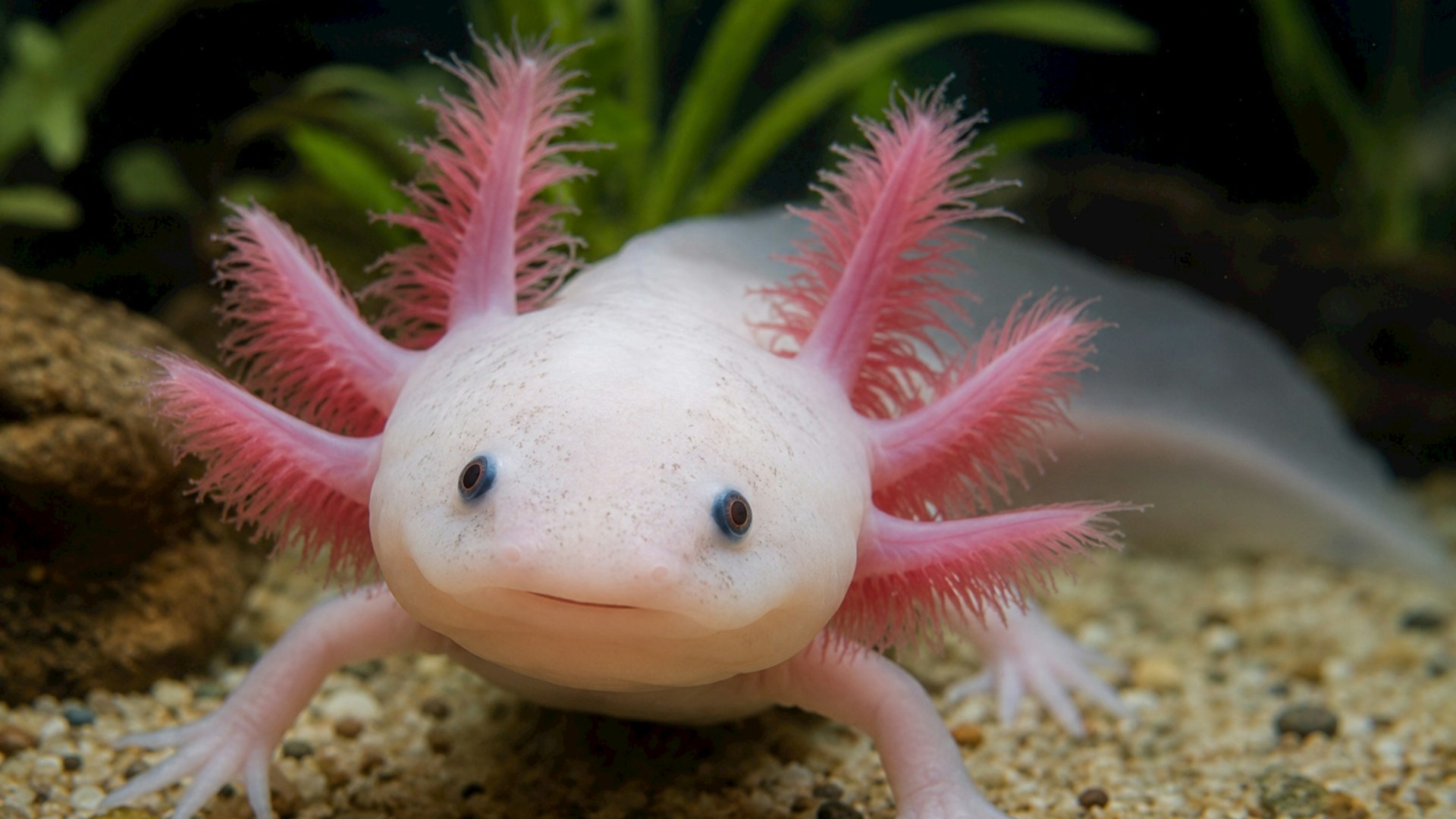
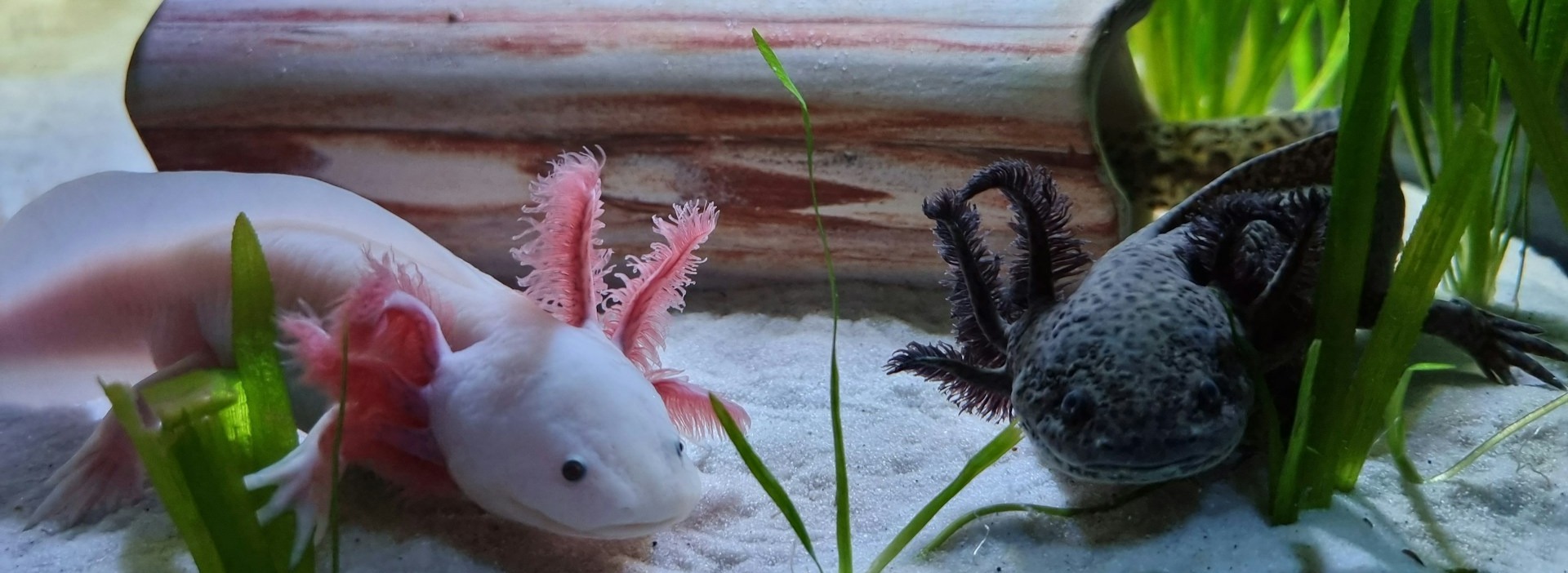
You have probably seen an axolotl before, even if you did not know its name. It is the pink or pale salamander with a permanent half-smile and a feathery crown of gills, popular in aquariums, science classrooms, and video games. It looks almost designed to be adored.
What is easy to miss behind that friendly face is a genuine puzzle. This animal is one of the most studied creatures in modern biology and one of the most abundant amphibians in captivity, yet in the wild it is barely holding on. Holding those two facts at once turns out to be a useful lesson in how conservation really works.
Why this matters in everyday life
Most of us meet wildlife through screens, tanks, and pet shops rather than in the places animals actually come from. That distance can quietly distort our sense of how a species is doing. An animal can be everywhere in our daily lives and almost nowhere in its native habitat, and the axolotl is one of the clearest examples of that gap.
It is also a reminder that biodiversity and human medicine are more connected than they first appear. Scientists study the axolotl because it may help us understand healing and tissue repair, so if wild populations disappear, we lose part of the living record that makes that research possible.
What an axolotl actually is
The axolotl (Ambystoma mexicanum) is a salamander, which makes it an amphibian, a relative of frogs, toads, and newts. Most salamanders begin life in water as gilled larvae and then go through metamorphosis, developing lungs, losing their gills, and moving onto land as adults. The axolotl skips that final step.
This is called neoteny, which simply means keeping juvenile features into adulthood. The axolotl stays aquatic for its whole life and holds onto its larval body plan, including the striking external gills that fan out behind its head. According to the standard scientific account, this happens because the axolotl does not produce enough of the thyroid-related hormone that triggers metamorphosis in other salamanders, so it reaches breeding age while still looking, in effect, like a very large larva.
In the wild, the axolotl comes from one small corner of the world: the highland lake system of the Valley of Mexico, in and around what is now Mexico City. Historically it lived in lakes Xochimilco and Chalco. Today, as the city has expanded and drained much of that ancient wetland, its natural range is limited to the canals and wetlands of Xochimilco.
What the evidence actually says
The regeneration is real, and it is unusual
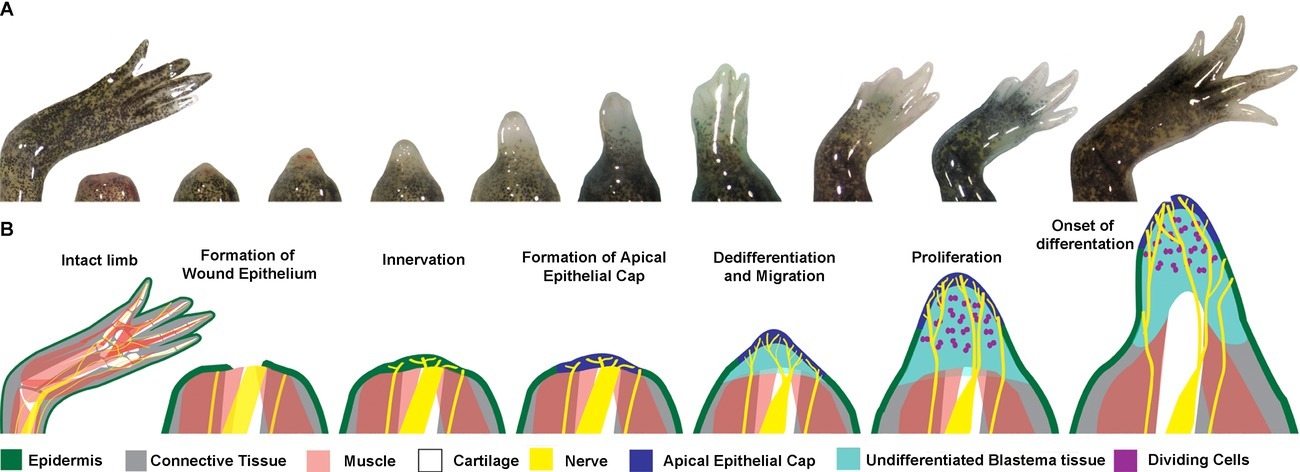
The axolotl's headline ability is regeneration, and here the science is genuinely remarkable rather than exaggerated. When an axolotl loses a limb, it can grow a new one, complete with bone, muscle, and nerves. Researchers describe it as able to regrow entire appendages such as limbs and the tail, and, in various studies, to repair more complex structures including parts of the heart, the spinal cord, tissues of the eye, and even portions of the brain.
Two things make this stand out. First, the axolotl does much of this without forming the scar tissue that mammals, including humans, typically produce at the site of an injury. Second, it retains this ability throughout adult life rather than losing it as it matures, which is unusual among vertebrates.
This is why laboratories around the world keep axolotl colonies. As researchers developing the animal as a model have put it, they are drawn to its capacity to regenerate tissues and organs, the fact that it breeds readily in the lab, and the relative ease of studying its genes. Much of the current work focuses on a specific question: why axolotls rebuild tissue where mammals form scars.
It is worth being careful about what this means for people. The hope, as scientists describe it, is that understanding these mechanisms could eventually inform treatments for injury, disease, and the effects of ageing. That is a reasonable long-term aim, not a promise. The axolotl is not a shortcut to regrowing human limbs, and most researchers frame their work as gaining insight into cellular and genetic processes rather than offering imminent cures.
The paradox: nearly gone in the wild, thriving in captivity
Here is the part that surprises most people. The axolotl is listed as Critically Endangered on the IUCN Red List, the category just before Extinct in the Wild. It has been assessed as Critically Endangered since at least 2006, having previously been listed as Vulnerable, and its population trend is still decreasing.
The wild numbers are stark. Surveys in Xochimilco recorded roughly 6,000 axolotls per square kilometre in 1998, around 1,000 by 2003, and about 100 by 2008, according to figures cited in the scientific literature, with researchers describing declines of around 99 percent between 1998 and 2014. The IUCN assessment estimates only somewhere between 50 and 1,000 adults remaining in the wild, while noting that the true figure is difficult to pin down. Because the animals are so scarce and hard to survey, these numbers should be read as estimates rather than exact counts, but the direction is not in doubt.
The causes are the familiar pressures on freshwater habitats. Mexico City's growth has drained and fragmented the old lake system. Sewage, agricultural chemicals, and urban run-off have degraded water quality in the canals that remain. And in the 1970s and 1980s, non-native tilapia and carp were introduced into these waters, where they prey on young axolotls and compete with them for food.
Now the paradox. At the same time as the wild population has collapsed, captive axolotls number in the many thousands, kept in research laboratories, zoos, and private aquariums around the world. Almost every axolotl you are likely to encounter is captive-bred. So the species is, in a real sense, both extraordinarily common and on the edge of vanishing, depending entirely on where you look.
There is cautious hope. A study published in the journal PLOS ONE in 2024 reported that captive-bred axolotls released into Xochimilco wetlands and a nearby artificial pond survived, and some even gained weight, suggesting they were hunting successfully. It is a small trial, not a recovery, but it suggests reintroduction may be possible if the habitat can be restored.
A place in Mexican culture
The axolotl is also woven into Mexican history. Its name comes from the Aztec deity Xolotl, a god associated with fire, lightning, twins, and the dead. That cultural weight is part of why the axolotl has become a national symbol and a focus of conservation pride in Mexico.
Practical actions you can take
You do not need to live near Xochimilco to help, and small, informed choices matter more than dramatic gestures.
Support wetland and freshwater conservation. Researchers in Mexico, including teams at the National Autonomous University of Mexico, work on restoring Xochimilco's water quality and habitat, and amplifying credible restoration projects helps.
If you keep or are considering an axolotl, choose responsibly. Buy only captive-bred animals from reputable sources, never wild-caught ones, and learn their care needs first, as they are long-lived, cool-water animals and a decade-long commitment.
Never release a pet axolotl, or any pet, into local waterways. Released animals can spread disease and disrupt native species, which is part of how the wild population got into trouble in the first place.
Protect freshwater closer to home. Reducing household chemical run-off and looking after local ponds and rivers all help the kinds of ecosystems axolotls depend on.
Common misconceptions to avoid
"Axolotls cannot be endangered, pet shops are full of them." This is the central misunderstanding. Abundance in captivity says nothing about survival in the wild. A species can be secure in tanks and critically endangered in its habitat at the same time.
"They can regrow anything, so nothing can really harm them." Regeneration helps with injuries, but it does not protect an axolotl from polluted water, lost habitat, or predators. Their resilience is biological, not ecological.
"Axolotls are baby salamanders that will grow up." They are fully mature adults that keep their larval form for life. A larger axolotl is not one step away from becoming a land animal.
"The pet trade is the main threat." Habitat loss, water pollution, and invasive fish are the dominant pressures on wild axolotls today. Responsible captive breeding is generally seen as a help rather than the core problem.
Frequently asked questions
Are axolotls actually going extinct? In the wild, they are close to it. The IUCN lists them as Critically Endangered, with estimates as low as 50 to 1,000 adults left in their native Xochimilco. In captivity, however, they remain common, which is why the species is not extinct.
Can axolotls really regrow their brains? They can regenerate some tissues, and studies report the repair of certain parts of the brain and spinal cord as well as limbs, tail, and heart tissue, largely without scarring. It is more accurate to say they can regenerate parts of the brain than to say they regrow an entire brain on demand.
Will axolotls help humans regrow limbs? Possibly, in the long term, but not soon. Scientists study them to understand how tissue repair works and why humans scar instead. Any medical benefit is an aim for future research rather than something available now.
Is it ethical to keep an axolotl as a pet? Keeping a captive-bred axolotl from a reputable breeder is generally considered acceptable, provided you can meet its needs. The important rules are to avoid wild-caught animals and never to release one into the wild.
Why is the axolotl only found in Mexico City? It evolved in the highland lakes of the Valley of Mexico and lives nowhere else naturally. As the city grew over those lakes, its range shrank to the remaining canals and wetlands of Xochimilco.
Key takeaways
The axolotl is a neotenic salamander: it stays aquatic and keeps its larval features, including external gills, for its whole life.
It can regenerate limbs, tail, and parts of the heart, spinal cord, and brain, largely without scarring, which is why it is a major model in regeneration research.
Claims about human regenerative medicine should stay measured. The science is real, but direct human applications remain a long-term hope, not a current reality.
In the wild it survives only in Xochimilco, Mexico City, and is Critically Endangered, with estimates as low as 50 to 1,000 adults, while remaining abundant in captivity.
Its decline is driven by habitat loss, pollution, urbanisation, and invasive fish, so protecting freshwater habitats matters more than anything happening in aquariums.
Related PetalPoko articles
12 Fascinating Facts About Jaguars, and Why They Matter to the Rainforest
How to Help Local Wildlife Without Accidentally Harming It
Why Bees Do Far More for You Than Make Honey
Sources and further reading
IUCN SSC Amphibian Specialist Group (2020). Ambystoma mexicanum, The IUCN Red List of Threatened Species. https://www.iucnredlist.org/species/1095/53947343
San Diego Zoo Wildlife Alliance, Axolotl (Ambystoma mexicanum) Fact Sheet: Population & Conservation Status. https://ielc.libguides.com/sdzg/factsheets/axolotl/population
Axolotl, Wikipedia (overview of biology, neoteny, range, regeneration, and status). https://en.wikipedia.org/wiki/Axolotl
MDI Biological Laboratory / ScienceDaily (2022), Scientists developing the axolotl as a model for regeneration. https://www.sciencedaily.com/releases/2022/06/220601170202.htm
Ramos, A., Zambrano, L., et al. (2024). Study on survival of captive-bred axolotls released in Xochimilco, PLOS ONE. https://doi.org/10.1371/journal.pone.0314257
Mongabay (2025), Hope for endangered axolotls as captive-bred group survives in wild. https://news.mongabay.com/short-article/2025/05/hope-for-endangered-axolotls-as-captive-bred-group-survives-in-wild/