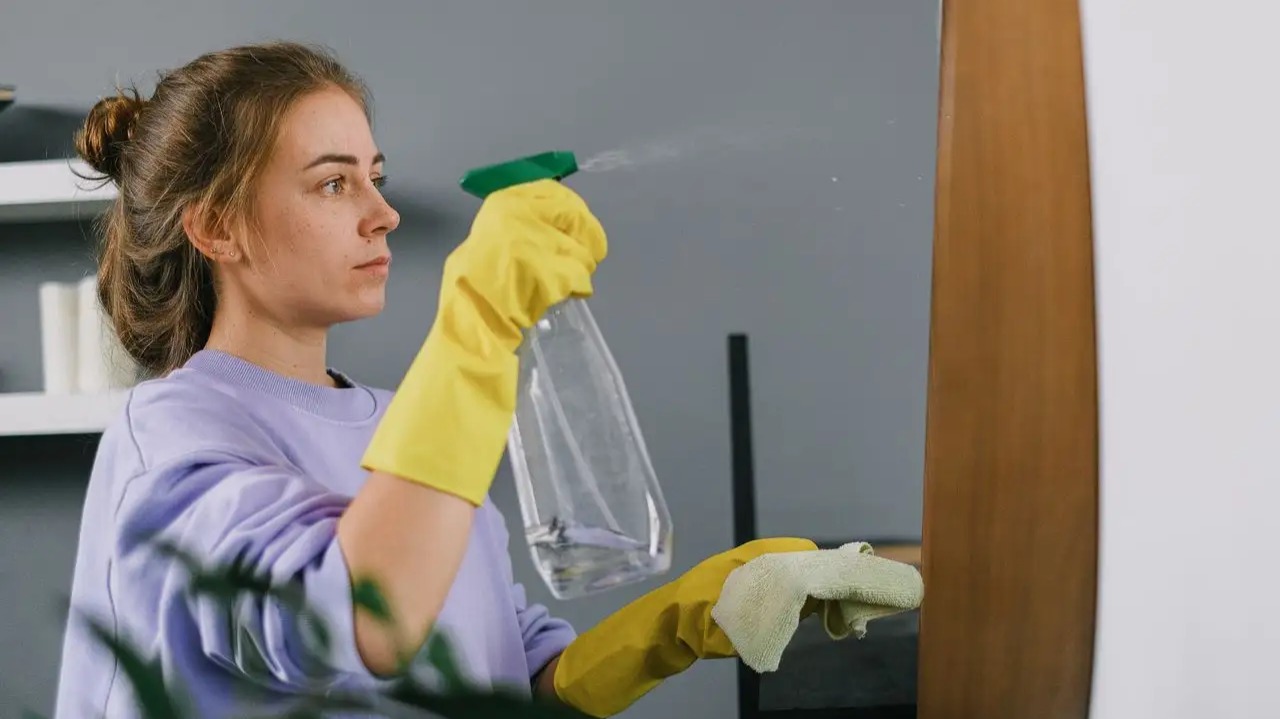

A quick question before you spray
Picture the moment you reach for an air freshener. The kitchen bin is a little ripe, guests are due soon, and a quick spray or a fresh plug-in seems like the easy fix. Within seconds the room smells of "linen" or "citrus," and the problem feels solved.
Here is the part that surprises many people. That pleasant scent has not removed the smell you were worried about, and it has not cleaned your air. It has layered a new set of scent chemicals on top of the old odour, so your nose notices the fragrance instead. If you have ever wondered what is in air fresheners, and whether any of it matters, this is a calm, evidence-led look at what these products actually do.
Why this matters
You spend a large share of your life indoors, so the air inside your home is worth paying attention to. Air fresheners are also extremely common, which means the question is not niche. In a fact sheet on the products, the Connecticut Department of Public Health cites survey work suggesting that about 20 per cent of the general population, and around 34 per cent of people with asthma, report health problems such as headaches or breathing difficulty when exposed to air fresheners.
That does not mean air fresheners are dangerous for everyone. It does mean that a product marketed as harmless and refreshing can affect a meaningful minority of people, especially those who are already sensitive. Knowing what is inside, and why, puts you in a better position to decide what you want in your own home.
What an air freshener actually does, and does not do
Start with the honest mechanics. An air freshener does not "freshen" or purify anything. As the Connecticut Department of Public Health puts it plainly, air fresheners "don't freshen or clean the air," they "add fragrance and in some cases chemicals that could be harmful to one's health." The device or spray adds scent molecules so that your nose registers the fragrance more strongly than the underlying smell. Some formulas also include ingredients that dull your sense of smell, which is why a bad odour can seem to fade even though its source is still there.
That last point matters more than it sounds. If a smell is coming from damp, mould, a gas leak, or spoiled food, masking it can hide an early warning you would rather have noticed.
The format changes how the scent is delivered, not the basic idea:
Aerosol and pump sprays release a burst of fragrance and propellant on demand, usually the largest dose in the shortest time.
Plug-in and electric diffusers warm a scented oil so it evaporates steadily, releasing fragrance continuously for days or weeks.
Gels and solid blocks release scent slowly as the material evaporates or dries out over time.
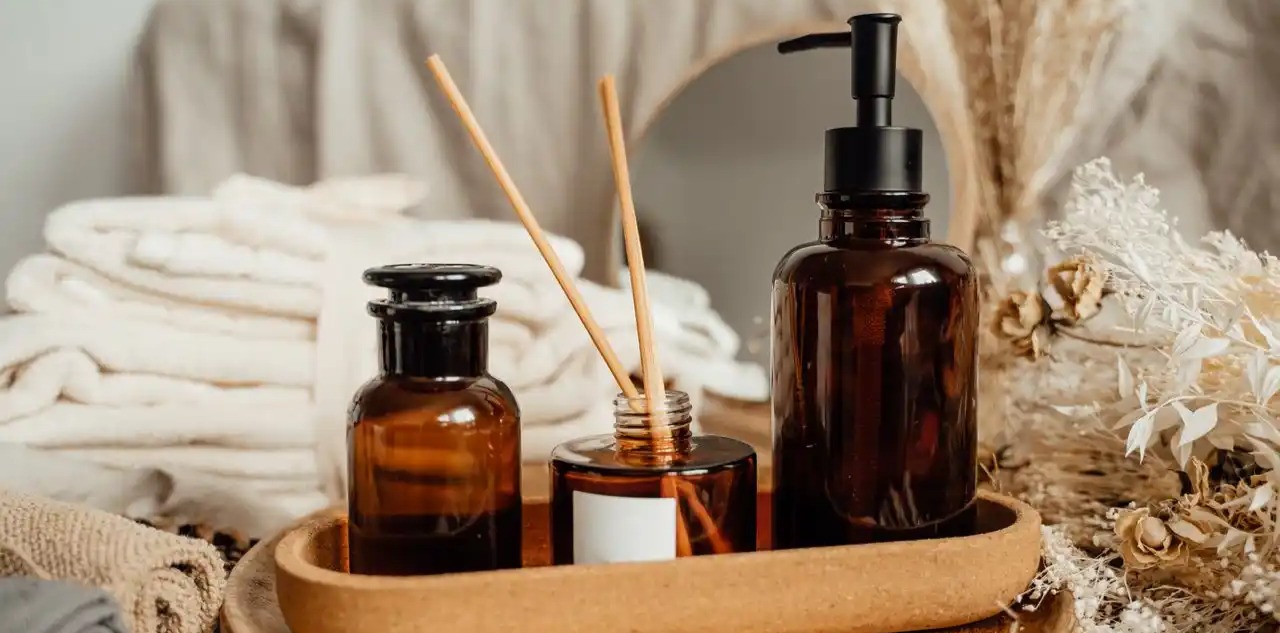
Reed diffusers draw scented oil up porous sticks, which then release fragrance passively into the room.
Continuous formats such as plug-ins, gels, and reeds are worth a second thought precisely because they keep emitting, hour after hour, in the same enclosed space.
What the evidence actually says about the ingredients and your health
This is where it pays to be careful, because the honest picture is a mixture of "we know quite a lot" and "we still do not know enough."
Fragrance is a black box. On most labels, dozens of individual scent chemicals appear as the single word "fragrance." The American Lung Association notes that fragrance ingredients "are often listed simply as 'fragrance' rather than by their individual chemical names," and that manufacturers are generally not required to disclose them. So when you buy a product, you often cannot know exactly what is in it.
Volatile organic compounds are part of the deal. Many fragrance and solvent ingredients are volatile organic compounds, or VOCs, chemicals that evaporate into the air at room temperature. The US Environmental Protection Agency lists air fresheners among common household sources of VOCs, and notes that concentrations of many VOCs are "consistently higher indoors (up to ten times higher) than outdoors." Peer-reviewed testing supports this: research led by Anne Steinemann, published in 2016, reported that fragranced consumer products emit numerous VOCs, including some classified as potentially hazardous, and that most of these were not listed on the label.
Some ingredients raise specific flags. The Connecticut Department of Public Health notes that air freshener formulas can contain phthalates, a group of chemicals used to help scent linger, along with solvents, propellants, and aldehydes. Certain fragranced products can also emit or generate formaldehyde, a known irritant. These are reasons for attention, not panic, and the amounts released by a single product in a ventilated room are generally low.
Indoor chemistry can create new pollutants. This is a subtler point. Some fragrance ingredients, particularly terpenes such as limonene (the citrus note), can react with ozone that is already present in indoor air to form "secondary" pollutants, including formaldehyde and fine particles. The American Lung Association describes how some fragrance chemicals "can react with ozone in the air to form new pollutants," and indoor-chemistry researchers have documented the same reaction pathway. In other words, what leaves the bottle is not always the full story of what you end up breathing.
Where the evidence is genuinely uncertain. Most confirmed effects are irritation-related: the American Lung Association and the EPA describe headaches, dizziness, coughing, and eye, nose, and throat irritation, along with worsening symptoms for people with asthma, allergies, or chemical sensitivities. Deeper or long-term health effects are much less settled. The American Lung Association is candid that "we know so little about the effects of products we inhale indoors, such as air fresheners," and that people with asthma can have worse breathing after inhaling them without researchers yet knowing exactly why. So the reasonable reading of the evidence is this: exposure is widespread, irritation and effects on sensitive people are reasonably well supported, and the larger health questions remain open.
Better ways to a fresh-smelling home 🏡
The encouraging news is that the alternatives are simple, cheap, and largely things you may already do. Public-health bodies and the American Lung Association tend to point in the same direction: deal with the source, then move the air ✅.
Find and remove the odour source first. Empty and rinse the bin, clear the fridge, check for damp or mould, and clean the drains, the litter tray, or the laundry basket. Once the source is gone, you may not need a scent at all.
Ventilate. Opening a window, running an extractor fan, or simply creating a cross-breeze dilutes odours and indoor VOCs with outdoor air. The EPA recommends increasing ventilation when you use products that release VOCs.
Reach for plain absorbers. An open box of bicarbonate of soda, a bowl of white vinegar, or activated charcoal can soak up odours rather than covering them. Regular cleaning does most of the work.
If you like some scent, keep it light and occasional. Fresh air, a briefly simmered pot of citrus peel or herbs, or opening the windows after cooking will carry a room a long way. If you choose to use a scented product, favour good ventilation, and consider that a short spray in a well-aired room releases far less over time than a plug-in running around the clock.
Choose fragrance-free where you can. For people with asthma, allergies, or chemical sensitivities, the American Lung Association suggests avoiding air fresheners and choosing fragrance-free options as a straightforward way to reduce exposure.
Common mistakes to avoid
Treating scent as cleanliness. A fragranced room is not a cleaner room. The smell tells you about the fragrance, not about the air.
Masking a smell that is a warning. Persistent damp, musty, or chemical odours can signal mould or another problem. Cover them and you may miss something worth fixing.
Running continuous formats in small, closed rooms. A plug-in or reed diffuser in a shut bathroom or bedroom emits into the same air for hours. If you use one, ventilate and give it space.
Assuming "natural," "essential oil," or "unscented" means emission-free. Natural fragrances still release VOCs such as terpenes, and "unscented" products sometimes contain masking fragrance. Read what you can, and stay a little sceptical of marketing language.
Spraying more when a smell returns. If the odour keeps coming back, the source has not been dealt with. More freshener adds more chemistry without solving the problem.
Frequently asked questions
Do air fresheners clean or purify the air? No. Public-health guidance is clear that they add fragrance rather than remove pollutants, and the Connecticut Department of Public Health states directly that they "don't freshen or clean the air." For genuine air cleaning, source control and ventilation do the real work.
Are air fresheners dangerous? For most healthy people using them occasionally in a ventilated space, the evidence does not support alarm. The better-supported concern is irritation, and worse symptoms for people with asthma, allergies, or chemical sensitivities. Deeper long-term effects are not well established, and researchers say more study is needed.
Which format is the least concerning? No format is scent without emissions, but the difference is mainly about dose over time. A brief spray in a well-aired room releases less over a day than a plug-in or reed diffuser running continuously in a closed room. Whatever you use, ventilation helps.
Are "natural" or essential-oil air fresheners safer? Not automatically. Natural scents still emit VOCs, and citrus and pine terpenes can react with indoor ozone to form secondary pollutants such as formaldehyde. "Natural" on the label does not mean nothing is released into your air.
What should I use instead? Remove the source of the smell, then ventilate. Bicarbonate of soda, white vinegar, or activated charcoal absorb odours, and regular cleaning prevents most of them. If you still want scent, keep it light, occasional, and paired with fresh air.
Key takeaways
Air fresheners mask odours and add fragrance; they do not clean or purify your air.
Under the single word "fragrance," products can contain many undisclosed chemicals, including VOCs and, in some cases, phthalates, and they can emit or help form irritants such as formaldehyde.
Some fragrance ingredients react with indoor ozone to create secondary pollutants, so what you breathe is not always what left the bottle.
The evidence best supports irritation and effects on sensitive people, especially those with asthma; broader long-term effects remain uncertain.
The most reliable path to a fresh-smelling home is to find and remove the odour source, ventilate, and lean on simple absorbers rather than more scent.
Related PetalPoko articles
Sources and further reading
US Environmental Protection Agency, "Volatile Organic Compounds' Impact on Indoor Air Quality": https://www.epa.gov/indoor-air-quality-iaq/volatile-organic-compounds-impact-indoor-air-quality
American Lung Association, "Fragrances": https://www.lung.org/clean-air/indoor-air/indoor-air-pollutants/fragrances
American Lung Association, "Do Air Fresheners Harm Lung Health?": https://www.lung.org/blog/air-fresheners-harm-health
American Lung Association, "Source Control": https://www.lung.org/clean-air/indoor-air/protecting-from-air-pollution/source-control
Connecticut Department of Public Health, "Air Fresheners: What You Need to Know": https://portal.ct.gov/-/media/Departments-and-Agencies/DPH/dph/environmental_health/eoha/pdf/AirFreshenerFSpdf.pdf
Steinemann, A. (2016), "Fragranced consumer products: exposures and effects from emissions," Air Quality, Atmosphere & Health: https://pubmed.ncbi.nlm.nih.gov/27867426/