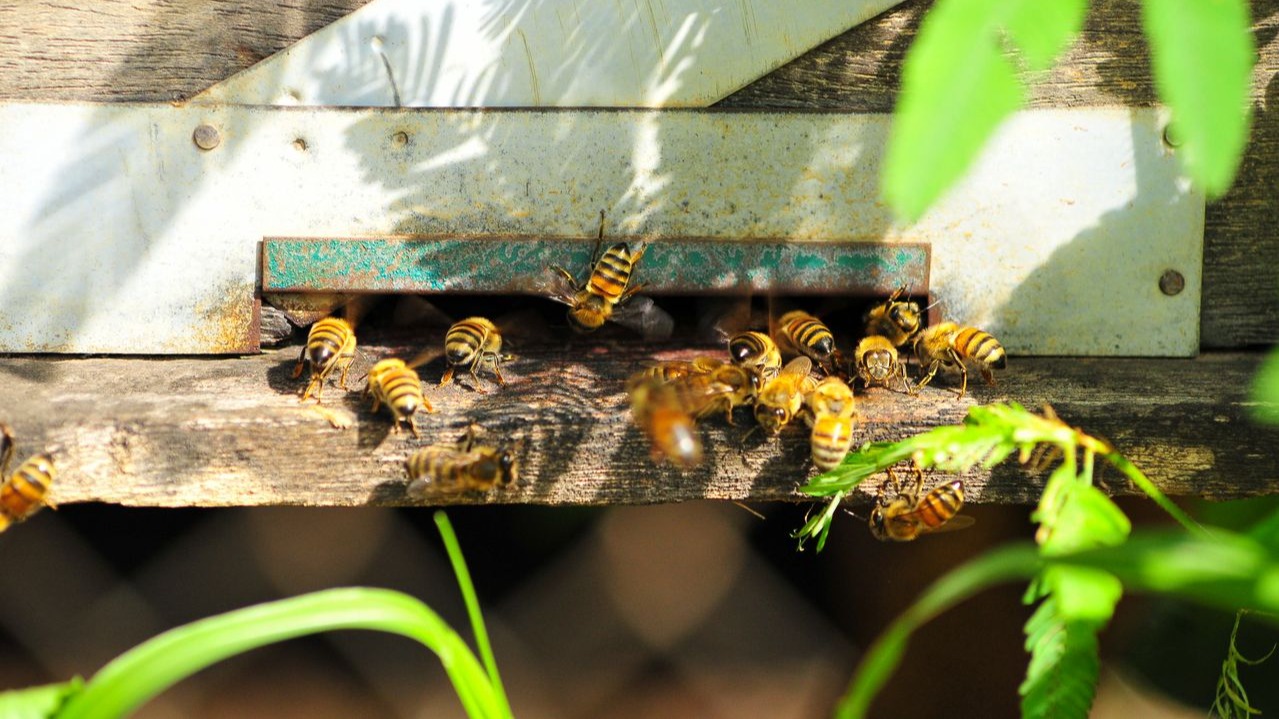
A jar of honey is the smallest thing a bee does for you
Most of us meet bees through honey. It is on the breakfast table, in the tea, in the label on a shampoo bottle. That association is so strong that it is easy to picture bees as small honey factories and little else.
The honey is real, and it is lovely. It is also a small part of the work bees do. Every time you eat an apple, a handful of blueberries, a square of dark chocolate, or a spoonful of pumpkin soup, there is a reasonable chance an insect made that food possible. Once you notice how much of a plate depends on pollination, it is hard to look at a bee the same way again.
Why this matters on your plate and beyond
You do not need to keep bees or grow food to have a stake in this. Pollinators sit quietly behind a large share of the variety, colour, and nutrition in an ordinary week of meals.
They also sit behind the countryside itself. The wildflowers in a hedgerow, the blossom on a park tree, the berries that feed birds through autumn: many of these depend on animal pollination too. So this is not only a farming story or a gardening story. It is part of how the living world around you keeps running, and much of it happens without anyone noticing.
What pollination is, and who actually does it
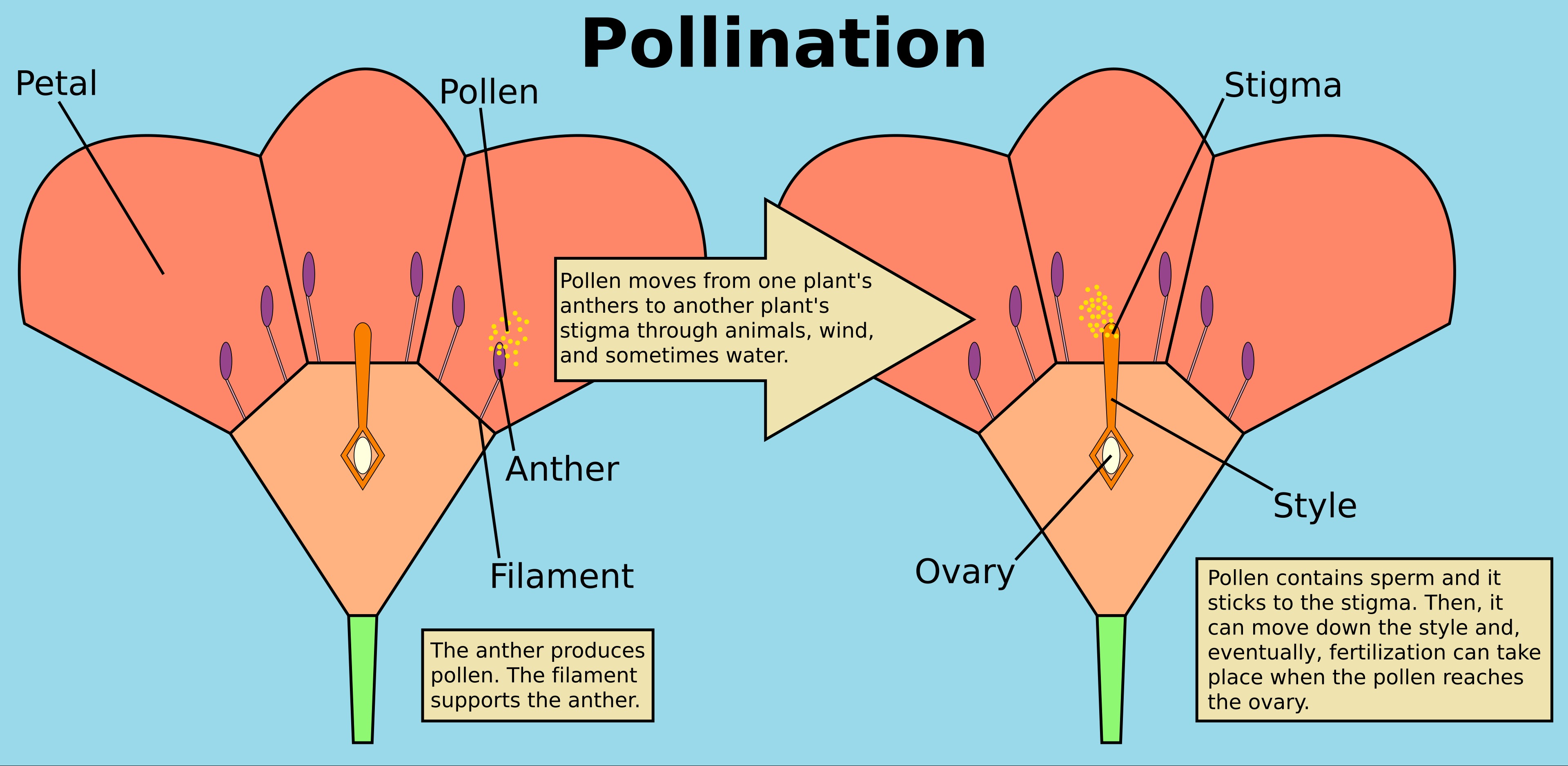
Pollination is simply the transfer of pollen from one flower to another so a plant can produce seeds and fruit. Wind and water move some pollen, but a great many plants rely on animals to carry it, and bees are among the most effective couriers because they visit flower after flower to collect pollen and nectar for their young.
Here the everyday picture tends to blur two very different things.
The first is the western honeybee. Honeybees live in large managed colonies, produce honey, and are, in effect, livestock. In North America they are not even native: they were brought over from Europe in the 17th century, as the United States Geological Survey notes. Beekeepers move and manage them much as a farmer manages any other animal.
The second, and far larger, group is wild bees. The Food and Agriculture Organization of the United Nations estimates there are more than 20,000 bee species worldwide, the majority of them wild. The Xerces Society counts more than 3,600 species native to North America alone. Most are nothing like the honeybee: bumblebees that fly in cool weather, and thousands of solitary bees that nest in the ground or in hollow stems and never make honey at all. Many are quietly excellent pollinators, and some crops are pollinated far better by these wild specialists than by honeybees. Butterflies, moths, hoverflies, beetles, birds, and bats do a share of the work as well.
So when people say "the bees", they are usually pointing at one domesticated species while thousands of wild ones do a great deal of the pollinating out of sight.
What the evidence actually says
The headline figures are strong, but they are easy to overstate, so it is worth being precise.
The clearest global assessment comes from IPBES, the Intergovernmental Science-Policy Platform on Biodiversity and Ecosystem Services, in its 2016 report on pollinators. Two of its findings are often muddled together:
Around 75% of the world's leading food crop types depend, at least in part, on animal pollination. The FAO puts it as pollinators enhancing the yield or quality of 87 of the 115 leading food crops.
Around 35% of global crop production by volume depends on animal pollinators.
The gap between those two numbers matters. Staples such as wheat, rice, and maize are wind-pollinated or self-pollinated, so they need little help from insects. That is why the volume figure is lower than the crop-type figure. Pollinators are strongly tied to the interesting, nutrient-rich part of the diet, the fruits, vegetables, nuts, and seeds, rather than to bulk calories.
You may have heard that "one in three bites of food" depends on bees. That line is widely used, including by the USDA and USGS, and it is a fair rough shorthand for how much pollinators touch our diet. It is best treated as an approximation rather than a precise measurement, and it describes all pollinators, not honeybees alone. The IPBES 75% and 35% figures are the more careful way to say much the same thing.
In money terms, IPBES and the FAO estimate that between US$235 billion and US$577 billion of annual global food output relies on the direct contribution of pollinators, and that the volume of pollinator-dependent crops has risen by about 300% over the past 50 years, so our farming leans on pollinators more heavily than it used to.
Beyond food, the FAO estimates that nearly 90% of wild flowering plants depend to some extent on animal pollination. Those plants feed and shelter countless other species, which is why pollinators are often described as underpinning whole food webs rather than just crops.
Now the honest part. Bees are under real pressure, though the picture is more layered than the alarming headlines suggest. IPBES estimates that about 16% of vertebrate pollinators, such as some birds and bats, are threatened with extinction globally, rising towards 30% for island species. For invertebrates the data are patchier, but regional assessments suggest more than 40% of invertebrate pollinator species may be at risk locally, and the Xerces Society reports that around 28% of North American bumblebee species are considered threatened.
The causes are several, and acting together. Friends of the Earth and the wider research literature point to habitat loss (the United Kingdom has lost roughly 97% of its wildflower meadows since the 1940s), pesticides including neonicotinoids that can impair bees' navigation and reproduction, pests and disease, and climate change shifting the timing of flowering and emergence. No single villain explains everything, and the drivers reinforce one another: a well-fed bee copes with a parasite far better than a hungry, pesticide-stressed one.
Practical actions that genuinely help
You do not need land or expertise. Small, steady choices add up.
Plant flowers that pollinators can actually use. Favour a range of native or well-adapted flowering plants that bloom across the seasons, so there is food from early spring to late autumn. A messy, varied patch beats a tidy, uniform one. Even a window box or a few pots helps.
Ease off the pesticides. Avoid spraying flowering plants, and be cautious with products containing neonicotinoids. Tolerating a few nibbled leaves is often the kindest option, and healthy planting attracts predators that keep pests in check anyway.
Leave a little mess. Many solitary bees nest in bare soil, dead stems, or old wood. A patch of undisturbed ground, a log pile, or seed heads left standing over winter provides nesting habitat that manicured gardens remove.
Offer water. A shallow dish with pebbles or marbles for bees to land on gives them somewhere safe to drink in hot weather.
Support the wider fixes. Backing reputable groups such as the Xerces Society, your national wildlife or beekeeping bodies, and campaigns for pesticide reduction helps address the landscape-scale causes that no single garden can.
Buy with awareness. Where you can, favour growers and schemes that protect field margins and reduce spraying. This is a modest lever, not a magic one, so treat it as one helpful factor among several.
Common mistakes to avoid
Assuming that keeping honeybees "saves the bees". This is the big one. Honeybees are managed livestock, and adding hives does little for wild bees. It can even work against them. The Xerces Society estimates a single honeybee hive can collect as much pollen over three months as would support the development of about 100,000 native solitary bees, and honeybees can pass diseases such as deformed wing virus to wild bumblebees. As Xerces puts it plainly, beekeeping is not bee conservation. Keep bees if you enjoy it, but count it as a hobby, not a rescue.
Blaming one cause for everything. Neonicotinoids are a genuine concern, but pinning the whole decline on any single factor, whether pesticides, mites, or 5G rumours, misreads the evidence. Habitat, chemicals, disease, and climate act together, so the useful responses tackle several at once.
Chasing perfection. You do not need a rewilded acre. A few well-chosen plants and a little tolerance for mess do more than an anxious overhaul you cannot sustain.
Frequently asked questions
Are honeybees endangered? Not really, in the way people imagine. Honeybees are a managed species, and their numbers are tracked and maintained by beekeepers. The genuine conservation concern is for wild bees and other wild pollinators, some of which are declining sharply.
If bees vanished, would we starve? No, but our diets would get narrower and less nutritious. Staple grains would mostly survive, while many fruits, vegetables, nuts, and seeds would become scarcer and dearer. Estimates suggest crop production would fall by a meaningful but not catastrophic margin, which is reason enough to act.
Do I need to keep bees to help? No. For most people, planting for pollinators, avoiding pesticides, and providing nesting habitat and water do far more good than keeping a hive, which can add pressure on wild bees.
Is honey bad for bees or for the environment? Honey itself is not the issue here. The point is simply that honey is a small part of what bees do. Enjoying honey and supporting wild pollinators are not in conflict, as long as we do not mistake beekeeping for conservation.
Are wasps and hoverflies worth protecting too? Yes. Hoverflies are underrated pollinators, and many wasps control garden pests. A healthy garden makes room for a range of insects.
Key takeaways
Honey is the least of it. Bees matter mainly as pollinators of food crops and wild plants.
Around 75% of leading food crop types benefit to some degree from animal pollination, and about 35% of crop production by volume depends on it (IPBES and FAO).
"One in three bites" is a fair rough shorthand, best treated as an approximation and applied to all pollinators, not honeybees alone.
Honeybees are managed livestock. Thousands of wild bee species do much of the real pollination and need the most help.
Bee decline is real but multi-causal: habitat loss, pesticides, disease, and climate change together.
You help most by planting for pollinators, easing off pesticides, leaving nesting habitat, and supporting reputable groups, not by keeping a hive.
Related PetalPoko articles
How to Turn Your Garden Into a Haven for Pollinators
12 Fascinating Facts About Jaguars, and Why They Matter to the Rainforest
How to Help Local Wildlife Without Accidentally Harming It
Sources and further reading
IPBES (2016), The Assessment Report on Pollinators, Pollination and Food Production: https://www.ipbes.net/document-library-catalogue/assessment-report-pollinators-pollination-and-food-production
IPBES press release, Pollinators Vital to Our Food Supply Under Threat: https://www.ipbes.net/node/11774
FAO, Global Action on Pollination Services for Sustainable Agriculture: https://www.fao.org/pollination/about/en
FAO newsroom, Pollinators vital to our food supply under threat: https://www.fao.org/newsroom/detail/Pollinators-vital-to-our-food-supply-under-threat/en
Our World in Data, How much of the world's food production is dependent on pollinators?: https://ourworldindata.org/pollinator-dependence
Xerces Society, Want to Save the Bees? Focus on Habitat, Not Honey Bees: https://xerces.org/blog/want-to-save-bees-focus-on-habitat-not-honey-bees
Xerces Society, Wild Bee Conservation: https://www.xerces.org/endangered-species/wild-bees
Friends of the Earth, What are the causes of bee decline?: https://friendsoftheearth.uk/nature/what-are-causes-bee-decline
United States Geological Survey, Honey Bee Helpers: https://www.usgs.gov/news/featured-story/honey-bee-helpers-it-takes-village-conserve-colony