A familiar shadow
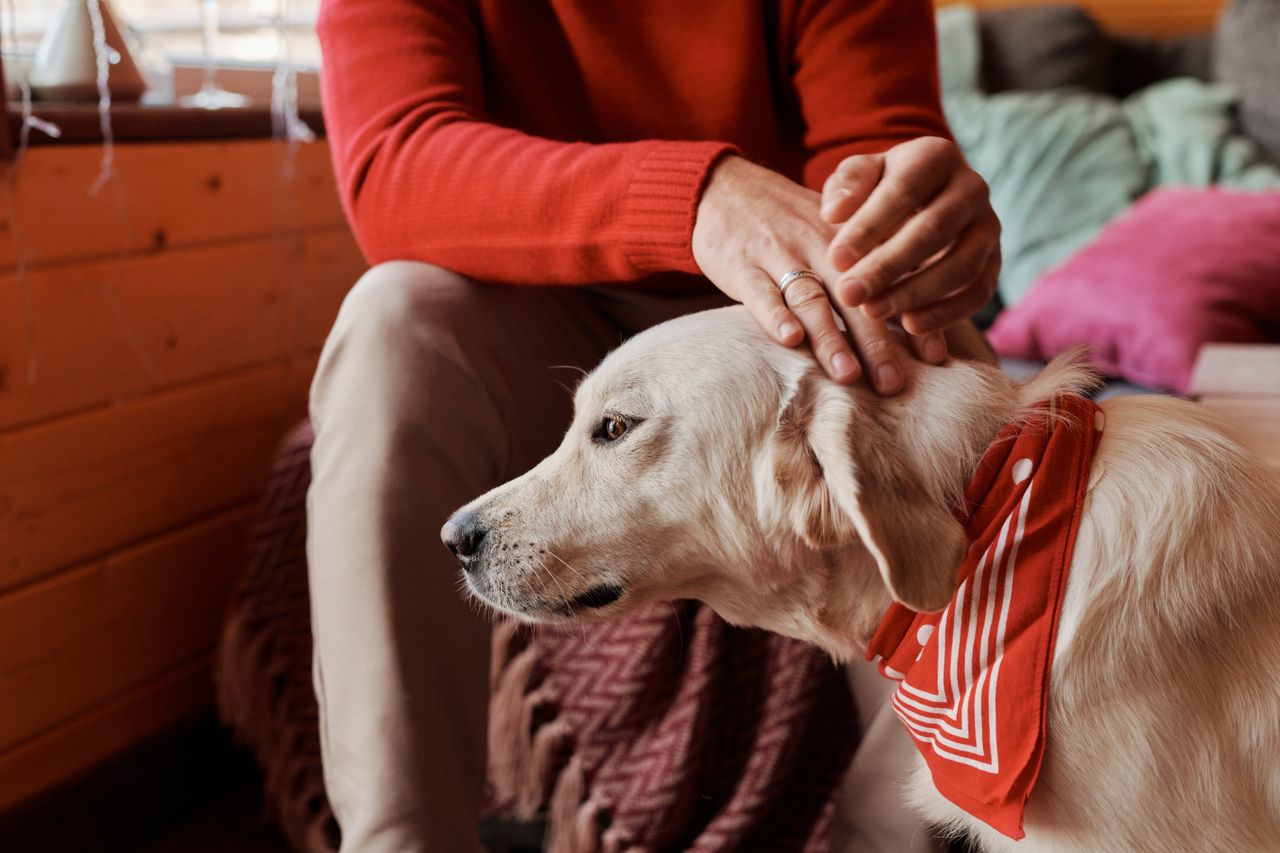
You stand up to fetch a glass of water, and there they are. You walk to the bathroom, and a nose appears at the door. You move three steps across the kitchen, and your dog moves three steps too, settling again with a small sigh once you stop. If it sometimes feels as though you have grown a warm, four-legged shadow, you are noticing something real, and something very common. Many owners describe exactly this, and there is even an affectionate nickname for it: the "velcro dog".
This behaviour is usually a sign of a healthy, well-bonded relationship rather than a problem to fix. Still, it is worth understanding what is going on, partly because it is genuinely interesting, and partly because there is one important situation, separation anxiety, where similar-looking behaviour needs a closer look.
Why this matters in everyday life
Most of the time, a dog who follows you around is simply keeping company. Understanding the reasons helps you respond in ways that suit both of you. If you enjoy the closeness, you can lean into it without worry. If the constant company is becoming difficult, underfoot on the stairs or during a busy work-from-home day, knowing the cause helps you gently encourage a little more independence.
It also helps you tell the difference between two things that can look alike. A dog who chooses to be near you when you are home is behaving normally. A dog who becomes genuinely distressed the moment you leave is a different case, and one where the right support can make a real difference to their welfare. Knowing which you are dealing with is the useful skill here.
What is actually going on
Dogs are social animals. According to the American Kennel Club, dogs are pack animals, and to your dog, you and your household are the pack. Staying close to their social group is a natural instinct, not a sign of neediness. Over thousands of years of domestication, dogs have also been shaped to live and work alongside people, so orienting their day around a human is, for many of them, close to what they were bred to do.
On top of this instinct sits a layer of learning. Following you often works out well for your dog. If being near you tends to produce attention, affection, a dropped morsel, or the start of a walk, then following becomes a habit worth repeating. There is also the simpler pull of curiosity and routine: you control doors, meals, and outings, so it makes sense to keep an eye on where you are going next.
What the evidence actually says
Veterinary and behaviour sources point to several overlapping reasons, and most velcro dogs are influenced by more than one at a time.
Social bonding and pack instinct. The AKC quotes author and physical therapist Sally Morgan, who puts it plainly: "Dogs are pack animals, and we are their pack." Staying near their group is a baseline social behaviour for dogs.
Bred to work with people. Some of this is written into breeding history. Dog trainer Erin Kramer, quoted by the AKC, describes close attachment as "a trait that's prized and bred into their genetic history", and points to breeds from the Working and Herding groups that were developed to work closely alongside humans. Hill's Pet similarly notes that certain breeds, including Labrador retrievers, golden retrievers, French bulldogs, and Chihuahuas, are often more inclined towards clingy, companionable behaviour. Breed is a tendency, though, not a guarantee, so plenty of individuals will not read the script.
Learned reinforcement. Following often gets rewarded, sometimes without you realising it. Veterinarian Dr Rachel Barrack, again via the AKC, explains that "if every time you are with your dog, he gets affection or treats, he's likely to follow you around more often." Hill's Pet makes the same point: everyday attention can quietly encourage the behaviour you are then puzzled by.
Attachment, safety, and security. For some dogs, closeness is about reassurance. The AKC notes that rescued dogs, or dogs with difficult past experiences, may carry a lingering fear of abandonment and stay near their owner for security. This is worth handling gently rather than discouraging.
Age at both ends of life. Puppies are natural followers. Dr Barrack notes that young puppies, roughly from birth to six months, often imprint on their owners and look to them much as they would their mother. At the other end, older dogs can become more dependent too. Dr Jerry Klein, the AKC's chief veterinary officer, points out that senior dogs losing sight or hearing may seek out their owner more for comfort and security. A sudden change in an older dog is worth mentioning to your vet, since it can occasionally signal a health or cognitive change rather than simple affection.
Taken together, the evidence suggests velcro behaviour is usually a normal blend of instinct, breeding, learning, and routine, rather than a fault.
How to respond, and how to encourage healthy independence
If the following does not bother you, there is nothing you need to do. Enjoying your dog's company is a perfectly good reason to let it continue. If you would like a little more breathing room, or you want your dog to cope calmly when you are out, a few gentle steps help.
Reward calm independence, not just closeness. Hill's Pet suggests praising your dog when they do something good on their own, such as settling calmly with a toy a short distance away. You are teaching them that being relaxed and apart is also rewarding, not only that being next to you pays off.
Meet their needs for exercise and mental stimulation. A dog with enough physical activity and enrichment, through walks, sniffing time, training games, or food puzzles, is often more content to rest independently rather than track your every move.
Build up short absences gradually. Practise leaving the room, or the house, for very short periods and returning calmly, slowly extending the time. Keeping arrivals and departures low-key helps your dog treat them as unremarkable.
Keep a predictable routine. Reliable timing around meals, walks, and rest gives an anxious or attentive dog fewer reasons to shadow you in search of the next event.
Rule out health changes if the behaviour is new. If a previously independent dog suddenly becomes clingy, especially an older one, it is worth a conversation with your vet to check nothing physical is behind it.
Common mistakes to avoid
The most frequent misstep is punishing or scolding a dog for following you. It rarely helps, and for a dog seeking security it can increase anxiety and confusion. A calmer approach, rewarding independence rather than telling off closeness, works better.
A second mistake is assuming all following is separation anxiety. Most of it is not. Reaching for that label too quickly can lead to worry, and sometimes to treatment a dog does not need.
The opposite mistake matters just as much: dismissing genuine distress as "just being clingy". If your dog panics when left alone, that is worth taking seriously rather than waiting out.
Finally, be wary of accidentally training in the very behaviour you would rather reduce. If closeness is always met with fuss, treats, or play, you may be reinforcing it without meaning to.
Frequently asked questions
Is it a problem that my dog follows me everywhere? Usually not. For most dogs it reflects a healthy bond and normal social instinct. It only becomes a welfare concern if your dog cannot cope when you are actually gone, which points towards separation anxiety rather than ordinary companionship.
How is normal following different from separation anxiety? The key difference is what happens when you leave. Hill's Pet describes it well: velcro dogs enjoy your company but can tolerate being apart, whereas dogs with separation anxiety become genuinely distressed when alone. Following you around the house while you are home is companionship. Panic when you are out is the signal to look closer.
What are the warning signs of separation anxiety? According to the ASPCA and VCA Animal Hospitals, signs include distress that appears specifically when the dog is left alone or as you prepare to leave: destructive behaviour such as chewing or digging at doors and windows, pacing in fixed patterns, excessive barking or howling, house-soiling in a house-trained dog, and attempts to escape. The ASPCA also notes that some look-alike behaviours, such as incomplete house training, boredom, or a medical issue, are not separation anxiety, which is one reason a professional assessment is helpful.
When should I contact a vet or behaviourist? If you notice the signs above happening specifically around your absences, it is worth speaking to your vet. The ASPCA recommends ruling out medical causes first, then working with your vet or a qualified behaviourist on a plan. Both the ASPCA and VCA emphasise professional guidance rather than tackling true separation anxiety alone.
Do certain breeds follow more than others? Tendencies vary. Working and herding breeds bred to partner closely with people can be more inclined to shadow their owners, and breeds such as Labradors, golden retrievers, French bulldogs, and Chihuahuas are often mentioned. Even so, breed is only a tendency, and individual personality and upbringing matter at least as much.
Key takeaways
A dog following you from room to room, the "velcro dog", is usually a sign of a healthy bond, not a fault.
The main drivers are social and pack instinct, a history of being bred to work alongside people, learned reinforcement, attachment and security, curiosity, routine, and age, especially in puppies and some older dogs.
You do not need to change anything if the closeness suits you both. If you want more independence, reward calm time apart, meet exercise and enrichment needs, and build up short absences gradually.
Normal companionable following differs from separation anxiety in one crucial way: what happens when you actually leave.
Distress that appears specifically when your dog is alone, shown through destruction, pacing, excessive vocalising, or house-soiling, warrants a conversation with your vet or a qualified behaviourist.
Related PetalPoko articles
Why Do Dogs Tilt Their Heads When You Talk to Them?
Why Does My Cat Sleep on Me? What the Science Actually Suggests
Separation Anxiety in Dogs: How to Recognise It and Help Your Dog Cope
Sources and further reading
American Kennel Club, "Why Does My Dog Follow Me Everywhere? It's in Their Genes": https://www.akc.org/expert-advice/advice/why-does-my-dog-follow-me-everywhere/
Hill's Pet, "Velcro Dogs: Managing Your Dog's Clinginess": https://www.hillspet.com/dog-care/behavior-appearance/velcro-dogs-and-clingy-behavior
VCA Animal Hospitals, "Separation Anxiety in Dogs": https://vcahospitals.com/know-your-pet/separation-anxiety-in-dogs
ASPCA, "Separation Anxiety": https://www.aspca.org/pet-care/dog-care/common-dog-behavior-issues/separation-anxiety