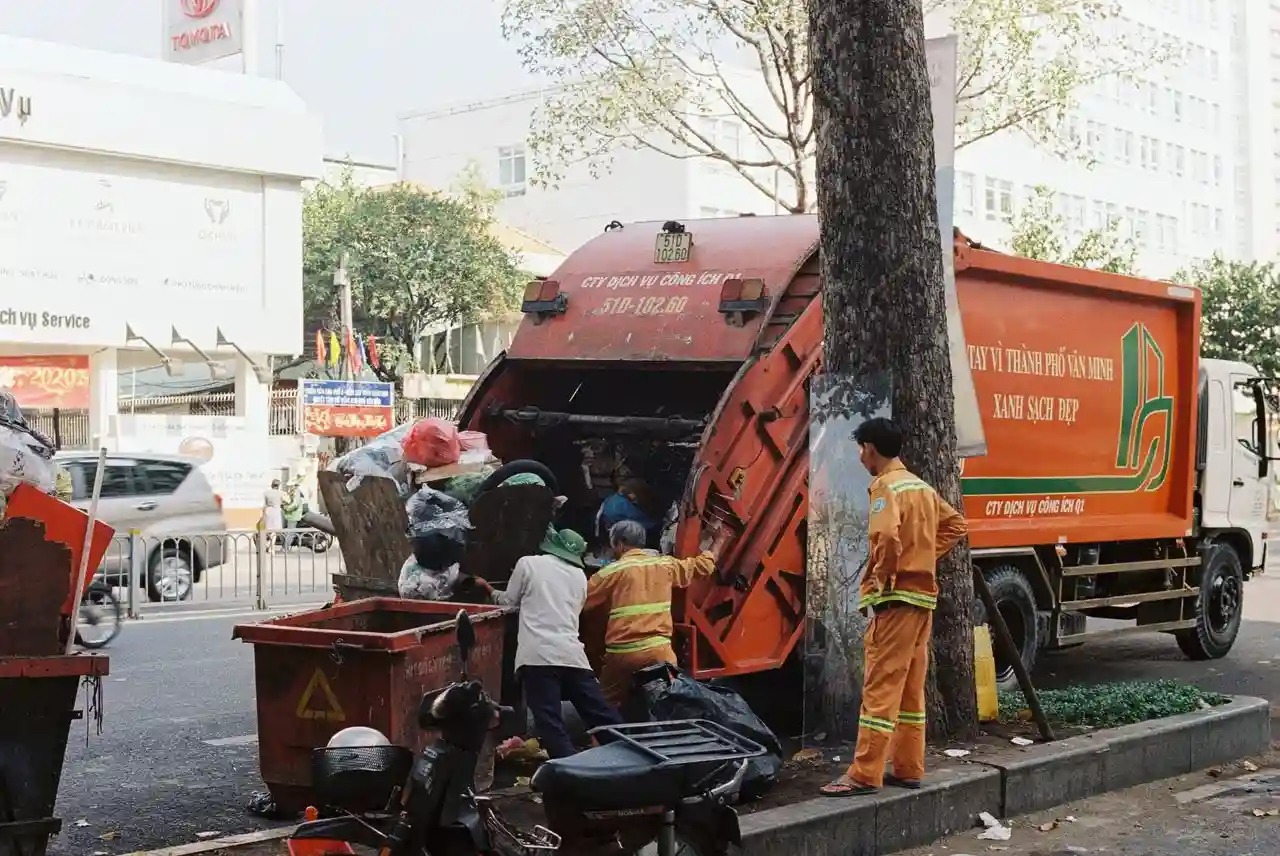
You carry the bin to the kerb, the lorry swallows everything in one loud gulp, and then the story goes quiet. You have done your part. But a reasonable question sits under that quiet: does any of it actually get recycled, or does it all end up in the same hole in the ground anyway?
It is a fair thing to wonder, and you are not being cynical for asking. The honest answer is that a lot of your recycling genuinely does become new material, some of it does not, and the difference depends on things that are mostly invisible from your kerb. This piece follows that bin the whole way, stage by stage, so you can see where the system works, where it strains, and where your own habits actually make a difference.
Why this matters in everyday life
Recycling is one of the few environmental habits almost everyone does, week in and week out. That makes it easy to assume it is either a solved problem or a total con, and neither is quite true.
Understanding the real journey matters for two practical reasons. First, it tells you which of your small efforts count and which are wasted motion, so you can spend less time agonising over every yoghurt pot. Second, it protects you from two opposite traps: the despair that says nothing works so why bother, and the complacency that says the bin fixes everything so you can buy whatever you like. The clearer picture sits between those, and it is genuinely more useful than either.
The journey in brief
Before the detail, here is the whole route in one breath.
Your recycling is collected from the kerb and taken to a materials recovery facility, usually shortened to MRF and said as "murf". There, a mix of machines and people sort it into separate streams: paper, card, glass, steel, aluminium, and various plastics. Each stream is squashed into large bales, which are sold as raw material to reprocessors. Those reprocessors, some domestic and some overseas, turn the bales back into usable stock: new paper, new cans, new bottles. Along the way, contamination and low-value materials are stripped out and sent to landfill or incineration. What survives the whole chain, and finds a buyer at the end, is what truly gets recycled.
Now the stages themselves.
1️⃣ Stage one: the kerb and the lorry
Collection is where the quality of the whole process is quietly decided, because it is where you and your neighbours load the raw material.
Broadly, there are two systems. In kerbside-sorted (or "multi-stream") collection, you separate materials yourself into different boxes or compartments, and the lorry keeps them apart. In commingled (or "single-stream") collection, everything recyclable goes in one bin and is separated later at the facility. Single-stream is more convenient and tends to lift the amount people put out, but because materials arrive mixed and sometimes dirty, it also raises the risk of contamination, which is one reason some places have stepped away from it, as trade coverage of United States cities moving off single-stream has noted (RoadRunner). Neither system is automatically "better"; they trade convenience against purity in different ways.
Either way, the lorry is just transport. The real sorting happens next.
2️⃣ Stage two: inside the materials recovery facility
A MRF is a large shed built around a moving story. According to Recycle Now, run by the sustainability charity WRAP, mixed recycling arriving at a MRF is "sorted and separated into different types of materials by hand or machine (or both)", along a system of conveyors, screens, and scanners.
The sequence looks roughly like this, drawing on Recycle Now's description of the process:
Bags are opened and obvious contamination is pulled out by hand at the start, before it can foul the machinery.
Vibrating screens shake lighter, flatter paper and card up and away from heavier containers.
Powerful magnets lift out steel cans, because steel is magnetic.
A device called an eddy current separator pushes non-magnetic aluminium off the belt, effectively flicking cans into their own stream.
Optical scanners identify different plastics by the way they reflect light and fire jets of air to sort them by type.
Glass, being heavy and prone to shattering, tends to drop out low down and collect at the end.
Machines do the heavy lifting, but people still matter. Human sorters catch what the sensors miss and pull out the things that should never have been there in the first place. It is skilled, fast, and often unpleasant work, and it is the reason a wrongly placed item is a real cost rather than a harmless mistake.
3️⃣ Stage three: what happens to each material
Once separated, each material has its own economics and its own fate. This is where the neat idea of "recycling" splits into very different real-world outcomes.
Paper and cardboard are the workhorses. They are widely collected, genuinely in demand, and among the most reliably recycled materials. In the United States, the Environmental Protection Agency (EPA) reported a recycling rate of 68.2% for paper and paperboard in 2018, far higher than any other everyday material. Paper fibres shorten each time they are recycled, so they cannot go round forever, but over several loops they do real work.
Steel cans are easy to recover thanks to those magnets, and steel can be remelted repeatedly without losing its essential qualities. It is one of the quieter success stories of the kerbside bin.
Aluminium is arguably the star. It can be recycled again and again, and recycling it uses a fraction of the energy of making it from raw ore. The International Aluminium Institute states that recycling aluminium saves about 95% of the energy needed for primary production, with a similar saving in greenhouse gas emissions. An aluminium can is one of the few things in your bin with enough value to more or less guarantee it finds a buyer.
Glass is endlessly recyclable in principle, and the EPA put the United States glass recycling rate at about 25% in 2018. In practice its fate is more mixed. It is heavy to transport, it breaks in commingled collections, and broken glass can contaminate other streams, so some of it is downcycled into aggregate for roads and construction rather than melted into new bottles.
Plastics are the hardest part of the story, and the most misunderstood. The little triangle with a number tells you the type of plastic, not that it will actually be recycled. Some types, such as PET drink bottles and HDPE milk bottles, have established markets and are genuinely recycled. Many others, especially films, pots, tubs, trays, and mixed or coloured plastics, have weak markets or none, so even when collected they may not find a reprocessor. The EPA reported a United States plastics recycling rate of just 9% in 2018. Most plastic can also only be recycled once or twice before the material degrades, unlike metal or glass.
4️⃣ Stage four: baling, buyers, and export markets
After sorting, each material is compressed into dense bales and sold. This is the point most people never picture: recycling is not a public service that ends at the facility gate, it is a commodities business. A bale only gets recycled if someone will pay for it and turn it back into stock.
That has two consequences worth sitting with.
The first is that recycling depends on markets, and markets move. For years, much of the world's recovered material was shipped to China. In 2018, China's "National Sword" policy sharply restricted imports of scrap plastic and paper and imposed strict contamination limits, as documented in reporting and academic analysis of the change (University at Buffalo). Prices for lower-grade materials fell, some collected material lost its buyer, and exporters redirected shipments to other countries. It was a blunt reminder that a bale is only as valuable as the demand for it.
The second is that a meaningful share of material still travels a long way. In England, government-reported figures compiled from Environment Agency data show that just over 600,000 tonnes of plastic packaging waste were exported for recycling in 2023, with more than a quarter going to Turkey and a rising share, over 26%, going to countries outside the OECD group of mostly wealthier nations (Envirotec, reporting official data). Export is not automatically a bad thing, because some countries have genuine reprocessing capacity. But it is harder to verify what happens at the far end, and investigations by groups including Greenpeace have documented UK plastic being dumped or burned in Turkey rather than recycled. This is an area of genuine uncertainty, and reasonable, well-sourced people disagree about how much exported material is truly recycled.
The honest picture: what really gets recycled
Now the part the tidy diagrams usually skip.
Overall recycling rates are lower than many people assume. The EPA calculated that the United States recycled about 23.6% of its municipal solid waste in 2018, rising to roughly 32.1% once composting is included. In England, the household recycling rate was 43.4% in 2022, according to Defra figures reported by the waste trade press (Circular Online), and it had slipped slightly from the year before. Rates vary widely between countries, regions, and even neighbouring councils, so any single number is a snapshot, not a verdict.
Plastic deserves its own line, because it is where hope and reality diverge most. The Organisation for Economic Co-operation and Development (OECD) estimated in 2022 that only about 9% of plastic waste worldwide is recycled, with the rest landfilled, incinerated, or leaking into the environment. That figure is global and comes with real uncertainty, but the direction is clear and consistent across sources: for plastic specifically, recycling is the exception, not the rule.
Two everyday behaviours quietly erode the numbers.
The first is contamination. When the wrong things go in, or the right things go in dirty, they can spoil the materials around them. Scholarship cited by Illinois State University puts the average recycling contamination rate at around 25%, meaning roughly one in four items placed in recycling bins does not belong there. Heavily contaminated loads can be downgraded or, in the worst cases, sent to landfill or incineration wholesale, because cleaning them costs more than they are worth.
The second is wishcycling: putting something in the recycling because you hope it can be recycled, rather than because you know it can. It is a kind, optimistic instinct, and it is a big source of that contamination. The greasy pizza box, the tangled plastic bag, the coffee cup with its plastic lining, the broken toy: these feel recyclable, but in most kerbside systems they are not, and they make the genuinely recyclable material around them harder to process.
So, to answer the question you started with: no, it does not all go to the same hole. Metal and paper largely do get recycled and do displace raw material. Glass mostly gets used, though not always as new glass. Much plastic does not get recycled, whatever the label suggests. And the system works better when the material arriving at the MRF is clean and correctly sorted, which is the one part of the chain you personally control.
How to recycle better
The good news is that better recycling is mostly about a few reliable habits, not encyclopaedic knowledge.
Follow your local rules, not general advice. Recycling is decided locally, and what your council accepts is the only list that matters. When guidance like this and your council disagree, your council wins.
When in doubt, leave it out. This is the single most useful rule. A recyclable item lost to the general bin is a small waste; a contaminant in the recycling can spoil a whole batch.
Empty, rinse, and dry. Containers should be free of food and liquid. They do not need to be spotless, just clean enough not to soil the paper and card they travel with.
Keep it loose. Do not bag your recycling inside plastic sacks unless told to; bagged material is often pulled out and binned unopened.
Learn the reliable winners. Aluminium cans, steel cans, cardboard, paper, and clear PET and HDPE bottles are the materials most likely to complete the journey. Prioritising these is a good use of attention.
Reduce and reuse first. Recycling is the last of the three Rs for a reason. The material that never enters the system is the only kind guaranteed not to be landfilled, incinerated, or lost at export.
Common mistakes to avoid
Trusting the recycling symbol. The number in the triangle identifies the plastic type; it is not a promise that your local system will recycle it.
Wishcycling hard-to-place items. Coffee cups, crisp packets, plastic film, and food-soiled card usually cannot go in kerbside recycling, however much you want them to.
Not rinsing containers. Food residue is a leading contaminant and can drag clean material down with it.
Bagging recyclables in plastic sacks. Sorters often cannot safely open them, so the contents may be discarded.
Assuming everything or nothing is recycled. Both extremes are wrong. The truth is material-by-material, and it rewards a little specific knowledge.
Frequently asked questions
Does my recycling really get recycled, or is it all a con? A large share genuinely is recycled, particularly metals and paper, and it does displace raw material. But outcomes vary by material and region, and for plastic specifically the recycled share is low. It is neither a con nor a solved problem; it is a real but imperfect system.
Do I need to wash everything before recycling it? It helps a lot, but perfection is not required. Empty containers and give them a quick rinse so they are free of food and liquid. Clean-enough material protects the paper and card it is collected with.
Why is plastic so much harder to recycle than glass or metal? Plastic comes in many chemically different types that cannot be mixed, several have weak or no end markets, and most degrades after one or two loops. Metals and glass, by contrast, can be remelted repeatedly without losing their core properties.
Is it bad that some recycling is exported abroad? Not automatically, because some countries have real reprocessing capacity. The concern is verification: it is harder to confirm what happens at the destination, and investigations have found some exported plastic dumped or burned rather than recycled. The evidence here is genuinely mixed.
If recycling is imperfect, should I stop bothering? No. Recycling metal, paper, and common bottles has real benefits, and doing it well costs you very little. The more useful shift is to lean on reducing and reusing first, so less depends on the bin in the first place.
Key takeaways
Your recycling goes to a materials recovery facility, where machines and people sort it into separate streams that are baled and sold as raw material.
Outcomes differ sharply by material: paper, steel, and especially aluminium recycle well, glass is often downcycled, and most plastic is not recycled at all.
Official figures show modest overall rates: about 23.6% of United States municipal waste recycled in 2018 (EPA), 43.4% of English household waste in 2022 (Defra), and only around 9% of plastic globally (OECD).
Contamination, running near 25% on average, and wishcycling quietly reduce how much survives the journey, and both are within your control.
The highest-value habits are simple: follow local rules, keep material clean and loose, when in doubt leave it out, and reduce and reuse before you rely on recycling.
Sources and further reading
US Environmental Protection Agency, National Overview: Facts and Figures on Materials, Wastes and Recycling (2018 data): https://www.epa.gov/facts-and-figures-about-materials-waste-and-recycling/national-overview-facts-and-figures-materials
Recycle Now (WRAP), What happens to my recycling?: https://www.recyclenow.com/how-to-recycle/what-happens-to-my-recycling
WRAP, Collections and reprocessing: https://wrap.org.uk/collections-and-reprocessing
OECD, Plastic pollution is growing relentlessly as waste management and recycling fall short (2022): https://www.oecd.org/en/about/news/press-releases/2022/02/plastic-pollution-is-growing-relentlessly-as-waste-management-and-recycling-fall-short.html
Circular Online, England's household recycling rate falls to 43.4%, Defra statistics show: https://www.circularonline.co.uk/news/household-recycling-rates-fall-to-43-4-defra-statistics-show/
Illinois State University, Ask a Redbird Scholar: How much of our recycling is not recycled?: https://news.illinoisstate.edu/2019/09/ask-a-redbird-scholar-how-much-of-our-recycling-is-not-recycled/
International Aluminium Institute, Aluminium recycling saves 95% of the energy needed for primary production: https://international-aluminium.org/landing/aluminium-recycling-saves-95-of-the-energy-needed-for-primary-aluminium-production/
University at Buffalo, Research study reports the impact of China's National Sword policy: https://www.buffalo.edu/news/releases/2022/03/029.html
Envirotec, Growth in UK plastic packaging recycling being shipped abroad, including to non-OECD countries: https://envirotecmagazine.com/2024/01/24/growth-in-plastic-packaging-recycling-being-shipped-abroad-including-non-oecd-countries/
RoadRunner, Why US cities are ending single-stream recycling: https://www.roadrunnerwm.com/blog/why-cities-are-ending-single-stream-recycling
Ellen MacArthur Foundation, Plastics and the circular economy: https://www.ellenmacarthurfoundation.org/topics/plastics/overview