The cup on the shelf
You have probably seen them lined up near the till: small plastic cups, each holding a single betta with trailing fins in red, blue, or violet. The scene quietly suggests something. If a fish can be sold in a cup the size of a takeaway coffee, surely it can live in a bowl not much bigger. It looks normal, so it feels safe.
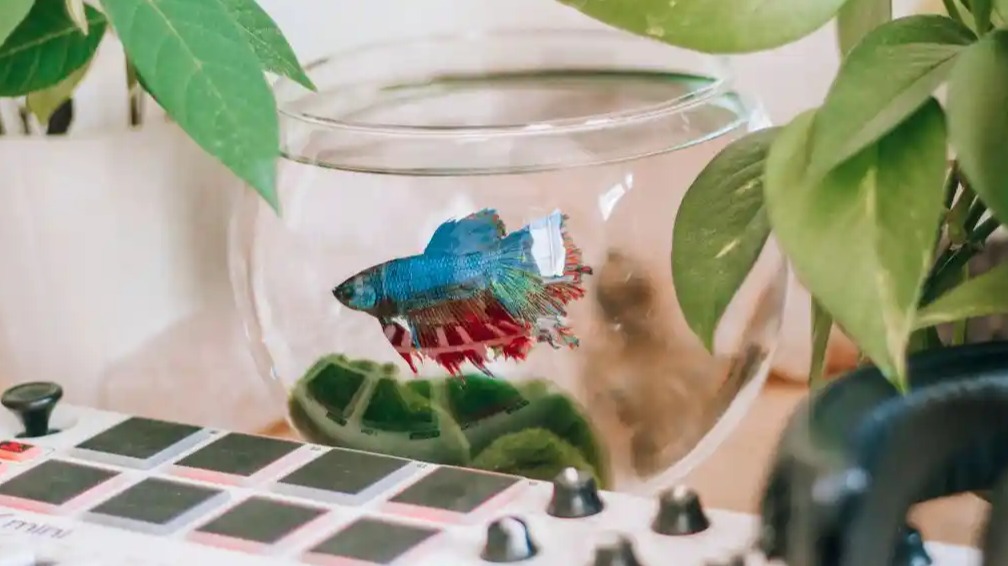
That impression is easy to trust and, unfortunately, wrong. The cup is packaging for the shop, not a blueprint for a home. If you have ever kept a betta in a small unheated bowl, you were following exactly what the shelf seemed to teach. This is not about blame. It is about what the evidence says a betta needs, and how small the gap is between a struggling fish and a thriving one.
Why this matters
A betta is a tropical animal with a nervous system, a sense of its territory, and clear physical needs. When those needs go unmet, the fish does not complain in a way most people notice. It simply slows down, fades, and often dies early. Because fish suffer quietly, poor conditions can look peaceful right up until the fish is unwell.
There is also a hopeful reason to get this right. A betta kept well can be a calm, curious, long-lived companion. According to PetMD, whose care information is written and reviewed by veterinarians, most bettas live three to five years, and some reach considerably longer with excellent care. Many bowl-kept bettas die within months. The difference is rarely bad luck. It is usually temperature, water quality, and space.
Where bettas really come from, and the myth of the puddle
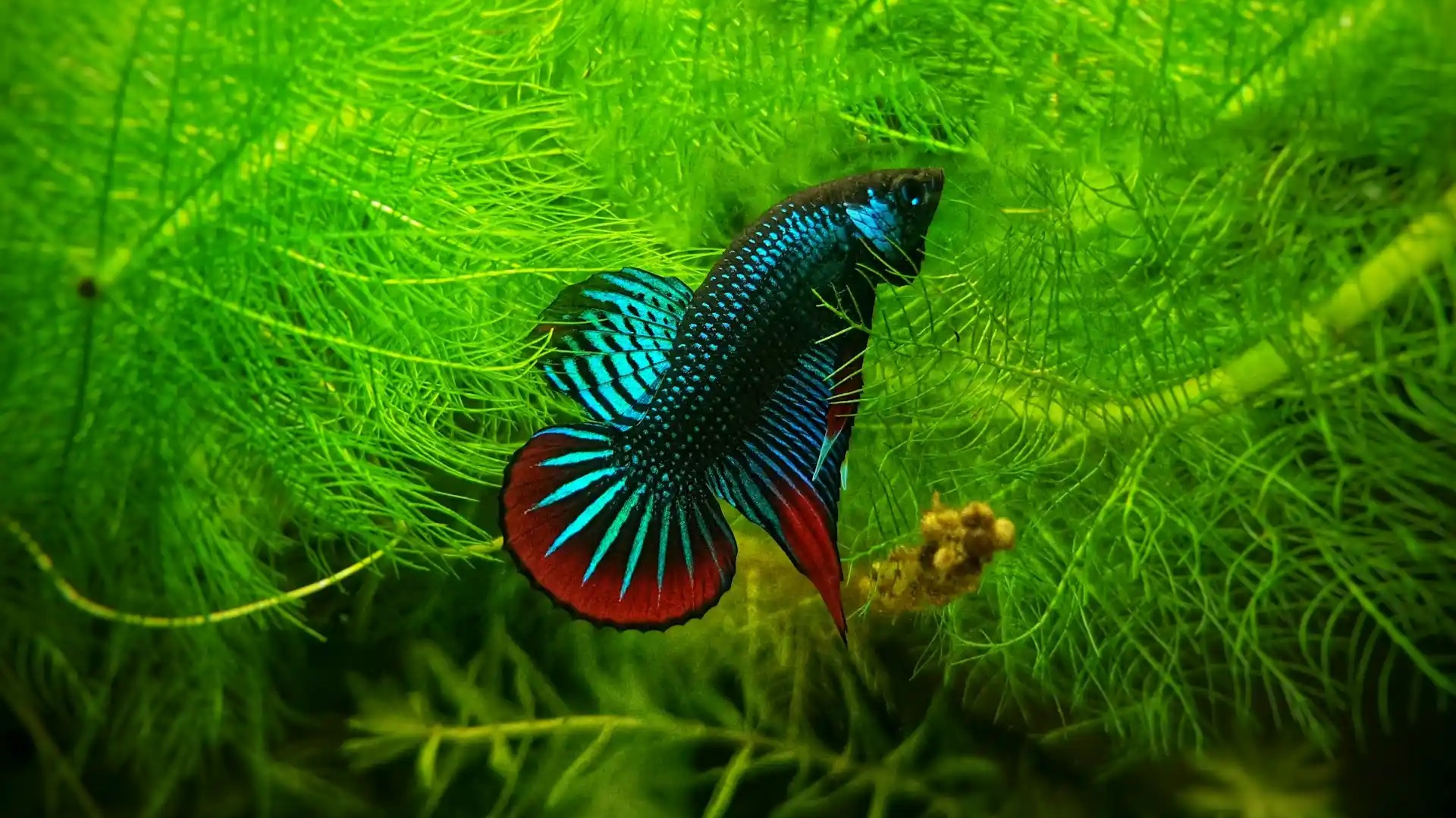
The betta most people keep is Betta splendens, the Siamese fighting fish, native to the warm freshwaters of Southeast Asia. The RSPCA notes that these fish originate from tropical regions and densely vegetated areas, not bare containers of still water.
You may have heard that bettas live in tiny puddles or the hoof prints of water buffalo, so a bowl is basically home. This is the misleading part. Wild bettas are found in shallow water, that much is true, but shallow is not the same as small. As the fishkeeping resource Aquariadise explains, these habitats are places like rice paddies, marshes, and swamps that are shallow yet vast, thick with plants and stretching far in every direction. The fish has room to patrol, hide, and retreat.
The genuine puddle only appears in a crisis. When the dry season shrinks a betta's territory, the fish may end up briefly stranded in a shrinking pool and even flip its way to better water nearby. That is survival under stress, not a lifestyle to copy. These wild waters are also warm and tropical, not the cool, fluctuating temperature of an average living room.
The labyrinth organ, and how it gets misused
Bettas have a genuinely remarkable feature called the labyrinth organ. It lets them gulp air from the water's surface and extract oxygen from it, on top of breathing through their gills like other fish. It is the reason a betta can survive in water that would suffocate many species.
Here is where good biology gets turned into bad advice. Because a betta can breathe air, some people conclude it does not need clean, oxygenated, or spacious water, which is why the fish is thought to tolerate a small, unfiltered bowl. The Chewy care guide, medically reviewed by veterinarians, puts the correction plainly: the labyrinth organ means a betta needs access to the surface, not that a small bowl is acceptable. It is a backup for hard times, not a licence to skip the basics. A betta still needs warm, clean, spacious water. It just has one extra tool for coping when that water runs low on oxygen.
What the evidence actually says a betta needs
Strip away the myths and the requirements are straightforward. Guidance varies between organisations, so treat the following as the well-supported middle ground rather than a single fixed rule.
Warm, stable water. Bettas are tropical. The RSPCA recommends keeping the water between 24 and 26 degrees Celsius using a submersible heater, and warns that ordinary room temperature is generally too cold and tends to fluctuate, which is stressful for the fish. Practical Fishkeeping cites a similar band of roughly 24 to 28 degrees Celsius with minimal fluctuation, and the veterinarian-reviewed Chewy guide gives an equivalent range of about 24 to 27 degrees Celsius. In short, aim for somewhere around 24 to 27 degrees Celsius, kept steady by a thermostatically controlled heater.
Enough space. This is where the bowl fails hardest. The RSPCA advises a tank of 20 litres or more so the fish can display normal activity, describes 10 litres as the absolute minimum, and states clearly that small tanks and fish bowls do not provide adequate space to meet the fish's physical and mental needs. In the wider hobby, a minimum of about 19 litres, roughly 5 US gallons, is very commonly recommended per betta, and PetMD suggests allowing around 5 gallons of space per fish. The exact number differs by source, but the direction of travel is consistent: bigger than a bowl, and bigger than you probably expect.
Filtration and a cycled tank. A filter is not a luxury. It houses the beneficial bacteria that break down the ammonia a fish constantly produces, converting it into less harmful compounds. The RSPCA recommends efficient filtration of a suitable size, and advises testing the water every two to three days for ammonia and nitrite during the first six weeks while the tank cycles and those bacteria establish. Practical Fishkeeping adds a useful detail: choose a filter that does not create a strong current, because bettas come from slow-moving water and dislike being pushed around.
Places to explore and hide. The RSPCA recommends several plants, real or artificial, and other forms of cover, noting that tall broad-leaved plants also give a betta somewhere to rest near the surface. Enrichment is not decoration for you. It gives the fish somewhere to feel secure, which reduces stress.
What a tiny cold bowl actually does
When you remove the heater, the filter, and the space, the harm follows a predictable path.
Without a heater, the water sits too cold and swings with the room, leaving the fish chronically stressed, sluggish, and off its food, an effect both the RSPCA and Practical Fishkeeping describe. Without a filter and enough water volume, waste accumulates fast, and in a small bowl ammonia builds toward toxic levels. The Chewy veterinary guide links these dirty, ammonia-heavy conditions to fin rot, where the fins fray and recede, and notes that the resulting stress suppresses the immune system, making disease more likely. The visible signs are a fish that hangs listless near the bottom, hides constantly, or stops eating. The end result of long-term stress, poor water, and cold is a shortened life: months rather than the three to five years a well-kept betta can reach.
How to do right by a betta
If any of this describes a fish you already keep, you have not failed. You were handed a shelf full of misleading cues. Improving things is genuinely straightforward, and your fish will show the difference.
Start with the tank, not the fish. Set up the aquarium before you bring a betta home. A single betta does well in a tank of around 19 litres or more, which is roughly 5 US gallons, and more space is better, not worse.
Add a heater. Fit a thermostatically controlled submersible heater and a simple thermometer, and settle the water at a steady temperature in the region of 24 to 27 degrees Celsius.
Fit a gentle filter and cycle the tank. Run a filter with a soft flow, and cycle the tank before adding the fish so the helpful bacteria are in place. If the fish is already in, do regular partial water changes with dechlorinated water and test for ammonia and nitrite while things stabilise.
Furnish it. Add plants and a couple of hiding spots so the fish has cover and something to investigate. Avoid sharp, hard ornaments that can tear those delicate fins.
Feed modestly and watch. Offer small amounts of a quality betta food and remove uneaten leftovers, which otherwise foul the water. A healthy betta is alert, moves easily, and comes to greet you.
Upgrade gradually. You do not need to fix everything in one afternoon. Get a heater and filter running, keep the water clean, and improve from there.
Common mistakes to avoid
Treating the shop cup as a housing standard. It is short-term transport packaging, nothing more.
Skipping the heater because the fish is "still alive". Surviving cold is not the same as thriving in warmth, and cold water quietly wears a betta down.
Believing the labyrinth organ replaces clean water. It supplements the gills. It does not excuse skipping filtration, water changes, or space.
Choosing a bowl because a filter would "blow the fish around". The answer is a gentle filter, as Practical Fishkeeping notes, not no filter at all.
Adding a betta to a brand new, uncycled tank. Without established bacteria, ammonia can spike quickly. Cycle first, or change water often and test while it settles.
Assuming a short life is normal. Many early betta deaths trace back to cold, dirty, or cramped conditions rather than the fish being naturally fragile.
Frequently asked questions
Can a betta survive in a bowl? Survive, sometimes, for a while. Thrive, no. The RSPCA states plainly that small tanks and fish bowls do not provide adequate space to meet a betta's physical and mental needs, and that most bowls are too small even to fit a heater properly.
Do betta fish really need a big tank? They need a proper one. A minimum of around 19 litres, roughly 5 US gallons, is very commonly recommended, and the RSPCA advises 20 litres or more for normal activity, with 10 litres as an absolute minimum. It does not need to be enormous, just heated, filtered, and roomier than a bowl.
Do I really need a heater if my home is warm? Almost certainly yes. The RSPCA notes that ordinary room temperature is generally too cold for a betta and tends to fluctuate, which stresses the fish. A thermostatic heater holds a steady tropical temperature that a room cannot.
But bettas live in puddles in the wild, don't they? Not as a rule. As Aquariadise explains, their natural homes are shallow but vast, plant-filled waters like rice paddies and marshes. Puddles only appear when those habitats dry out in a crisis, which is survival, not a preference.
How long should a betta live with good care? Most bettas live three to five years according to PetMD's veterinarian-reviewed guidance, and some live longer still. A very short life usually points to conditions rather than the fish.
Key takeaways
The pet shop cup is packaging, not a home. It teaches the wrong lesson about what a betta needs.
Wild bettas live in shallow but expansive, warm, densely planted waters, not tiny stagnant puddles.
The labyrinth organ lets a betta breathe surface air, but it still needs clean, warm, oxygenated, spacious water.
Aim for a heated tank at around 24 to 27 degrees Celsius, gentle filtration, a cycled tank, and a minimum size of roughly 19 litres, about 5 US gallons, with guidance varying by source.
Small cold bowls drive temperature stress, ammonia build-up, fin rot, disease, and shortened lives. A well-kept betta can live around three to five years.
If your current setup is a bowl, you were misled, not careless. Adding a heater, a gentle filter, and more space turns things around.
Related PetalPoko articles
Sources and further reading
RSPCA Knowledgebase, "How should I care for my Siamese fighting fish?": https://kb.rspca.org.au/categories/companion-animals/fish/how-should-i-care-for-my-siamese-fighting-fish
Practical Fishkeeping, "Guidelines released for keeping Fighters": https://www.practicalfishkeeping.co.uk/fishkeeping-news/guidelines-released-for-keeping-fighters/
PetMD (veterinarian-reviewed), "7 Betta Fish Facts: Lifespan, Size & Care": https://www.petmd.com/fish/care/betta-fish-facts
Chewy (veterinarian-reviewed), "How to Keep Your Betta Fish Healthy and Happy": https://www.chewy.com/education/fish/betta-fish/how-to-keep-your-betta-fish-healthy-and-happy
Aquariadise, "Betta fish in the wild: Where do wild Bettas live?": https://www.aquariadise.com/betta-fish-in-the-wild/